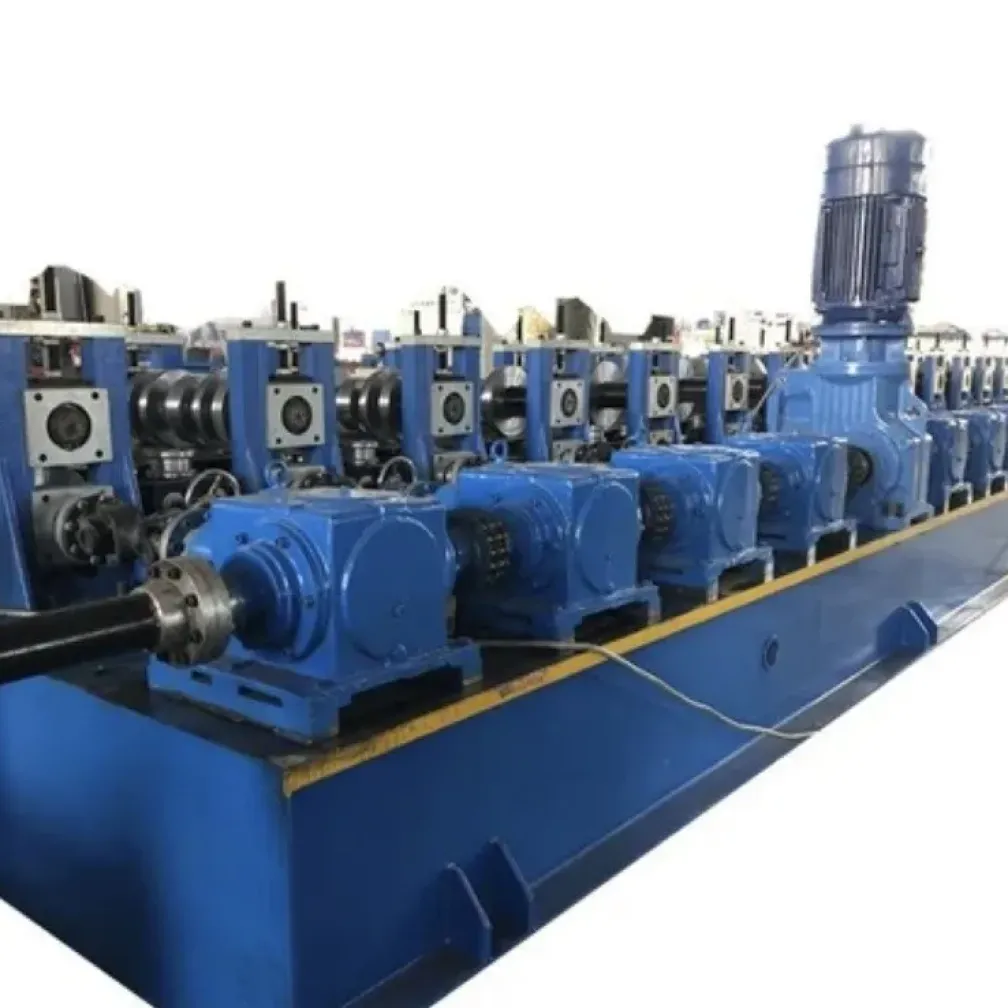
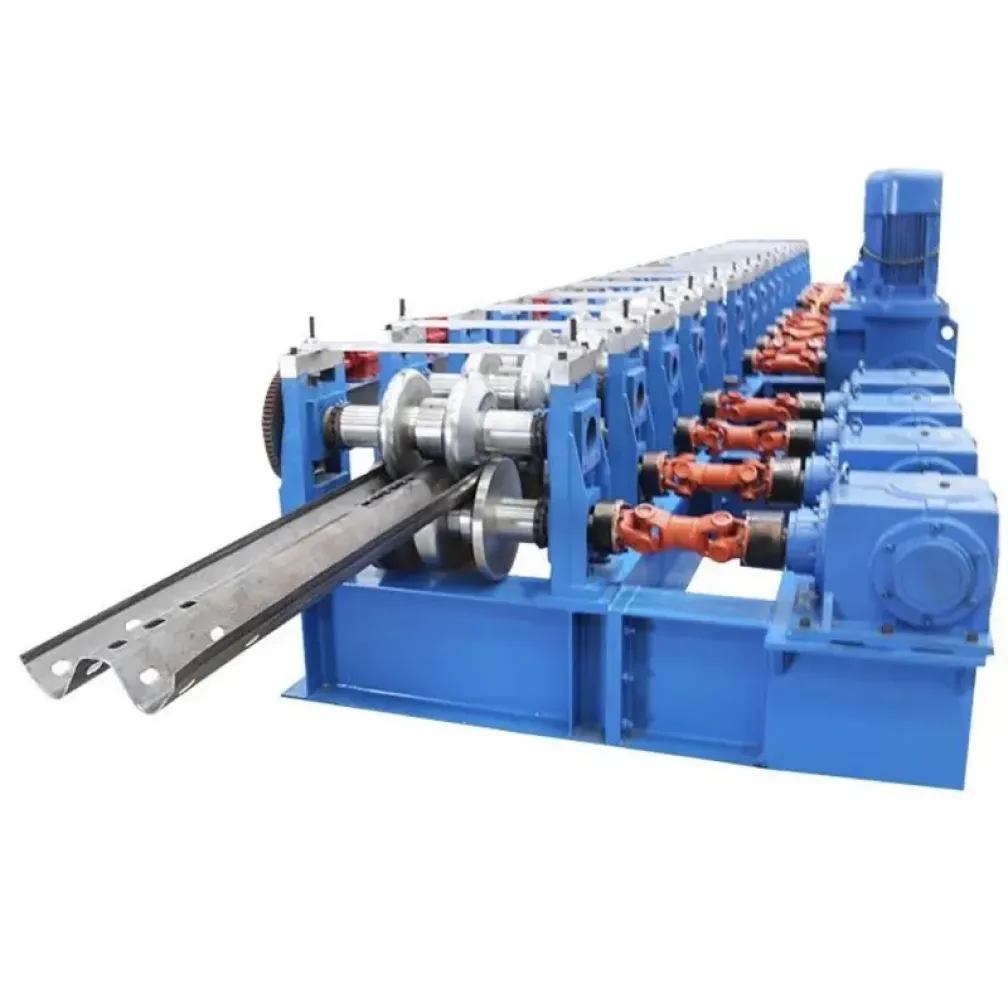
What a Two-Wave Guardrail Roll Forming Machine Produces
A two-wave guardrail panel, known in most markets as W-beam, is the standard longitudinal barrier of highways and rural roads. The corrugated beam mounts on posts along the roadside; on impact it deforms in a controlled way, absorbs energy and redirects the vehicle along the barrier line instead of letting it leave the road or cross into opposing traffic. Panel geometry follows the standard of the destination market, such as AASHTO M180 in North America or EN 1317 compliant designs in Europe. The machine on this page forms these panels from high-strength strip, punches the fixing holes inline and cuts panels to installation length.
Why High-Strength Strip Defines the Machine
Guardrail panels work by design under vehicle impact, so their steel grade is part of the safety function: Q700HL and S355MC grades give the beam the tensile strength to contain and redirect vehicles without tearing. High-strength strip of 2.0-4.5 mm resists forming far more than ordinary construction strip, and the mill is built around that fact. The forming section runs 15-24 stands, commonly 17-18, so the wave shape develops gradually and springback stays controlled. Rollers are GCr15 bearing steel or Cr12 mold steel, quenched to HRC 58-63, to survive the contact loads. Main motor power between 55 and 120 kW is matched to the thickness range, and the hydraulic stiffener unit presses the reinforcing rib that the panel drawing specifies.
Line Walk-Through
- Uncoiler with coil car, leveling and shear welding for coil joining
- Floor looper buffering strip during coil changes
- Elevated leveling unit and servo feeding ahead of punching
- Hydraulic punching of post holes and splice holes
- Hydraulic stiffener unit and 15-24 stand forming section
- Servo tracking hydraulic flying cut, then straightening
- Conveying and intelligent stacking, shared with three-wave panels
The flying cut is sized for thick high-strength strip: it shears the moving panel at line speed and holds cut length error within 2 mm, so panels arrive on site ready to bolt without trimming.
Two Waves or Three: The Project Question
Two-wave W-beam covers the bulk of highway and rural road mileage worldwide. Three-wave panels add a third corrugation for higher containment levels, typically on bridges, medians and high-risk sections. Guardrail producers usually serve both markets, and on this line the downstream equipment, stacking included, is shared between the two profiles; the forming section and tooling are built for the wave profile specified at order stage. A plant planning both products should state the expected share of each at inquiry, so the line layout reflects the real product mix.
Main Applications
- Expressway and national highway roadside barriers
- Rural and provincial road safety installations
- Municipal road and bridge guardrails
- Tunnel approach protection and industrial park roads
What To Prepare Before Requesting a Quote
- Panel drawing with wave dimensions, thickness and hole pattern
- Target standard of the destination market
- Steel grades and strip supplier specification
- Monthly output target in panels or tons
- Site power supply and preferred control brands
FAQ
What is the difference between two-wave and three-wave guardrail?
Two-wave W-beam is the standard roadside barrier panel for general highway mileage. Three-wave panels carry a third corrugation and reach higher containment levels for bridges, medians and high-risk sections. The forming tooling differs between the two profiles; downstream conveying and stacking on this line serve both.
Which steel grades can the line form?
The mill is specified for Q235, Q700HL and S355MC strip in 2.0-4.5 mm. High-strength grades are the common choice where the panel standard writes tensile requirements, and the pass count, roller material and motor power are matched accordingly.
Can one line produce both two-wave and three-wave panels?
The punching, cutting, conveying and stacking sections are shared. The forming section is built per wave profile, so a two-profile plant orders the forming tooling for both profiles at order stage. State the product mix in the inquiry.
What production speed should a guardrail plant expect?
The forming section runs 0-15 m/min depending on thickness, with 8-12 m/min as the common working range on high-strength strip. Punching workload per panel affects the effective hourly output more than the nominal line speed.
What delivery and installation terms apply?
Standard lines ship in 30-45 days and customized configurations in 60-90 days, after a full-line test run on the order material. THRONCH engineers complete installation and commissioning on site and train the operating crew before handover.