What a C Purlin Roll Forming Machine Produces
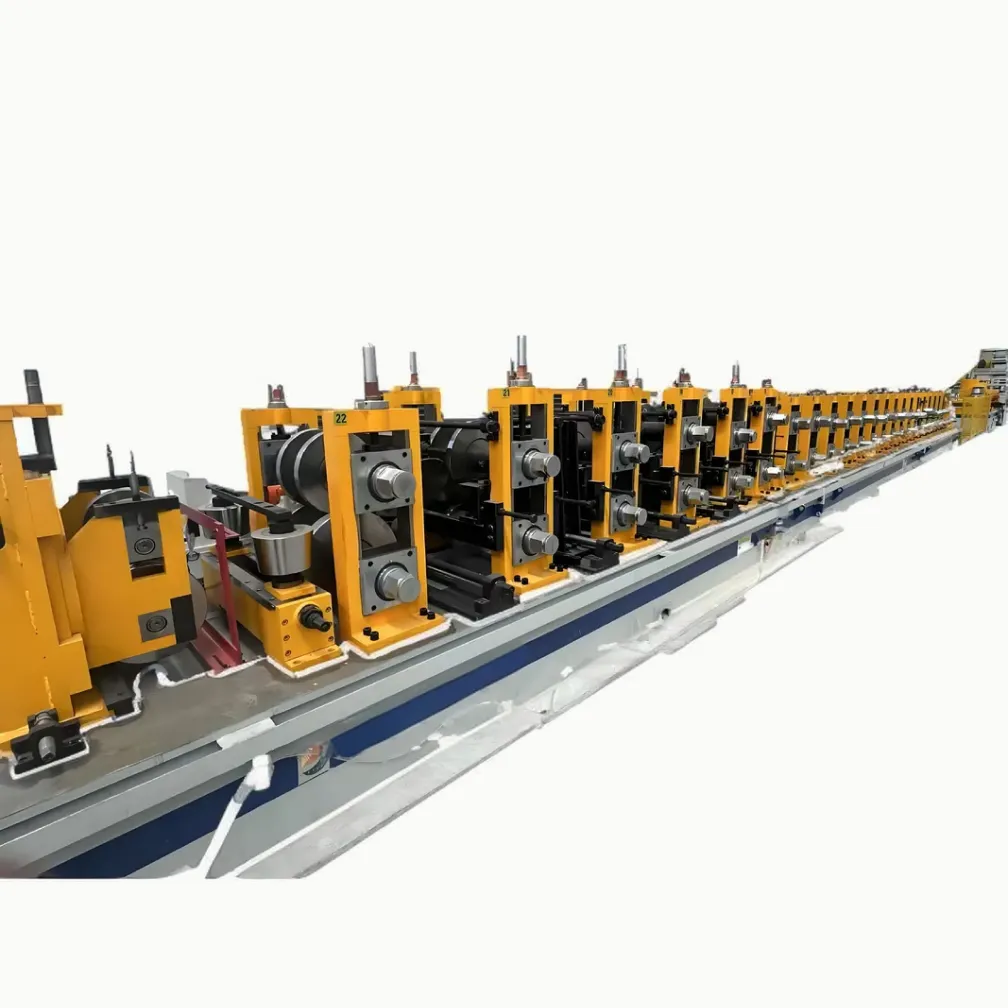
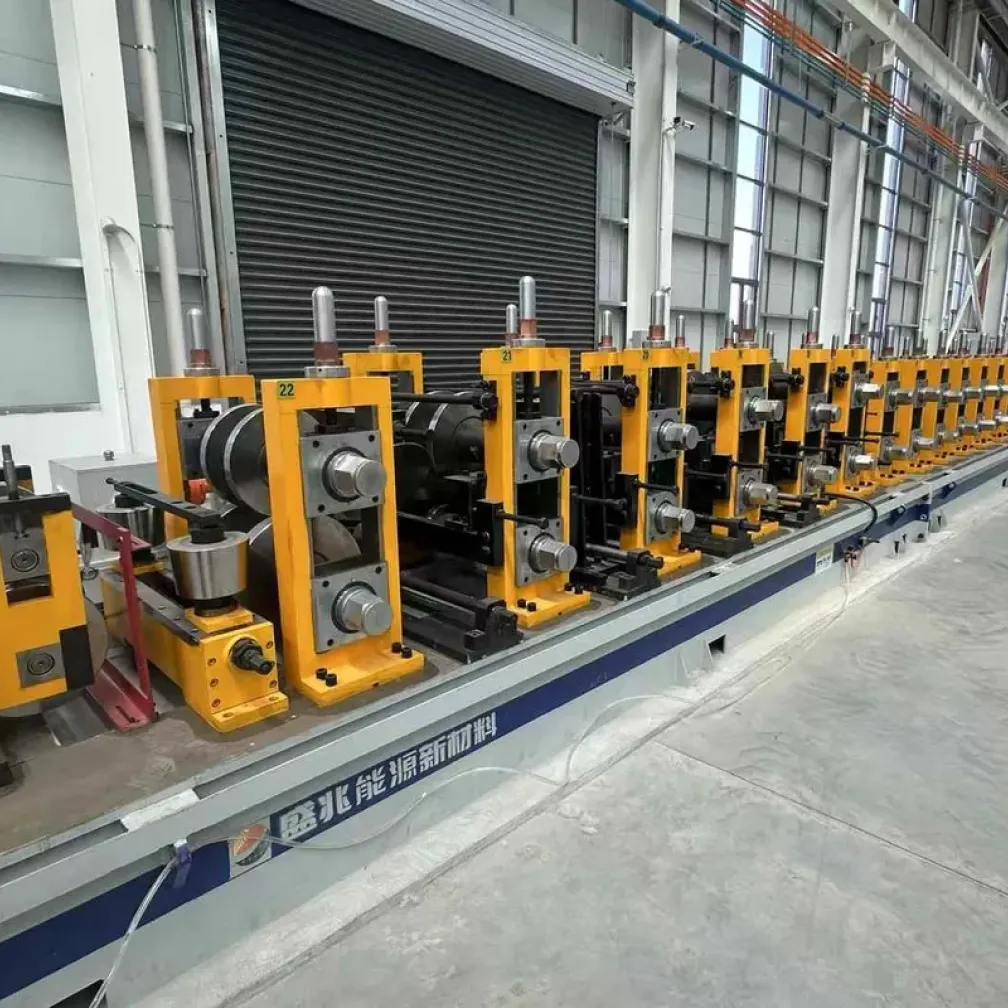
A C purlin is a cold-formed steel section with a symmetrical C-shaped cross section, a short lip on each flange, and a high strength-to-weight ratio. It serves as roof purlins and wall girts in steel structure buildings, and the same section is widely used in solar PV mounting structures, trailer and vehicle frames, and equipment support steel. The machine on this page produces these sections continuously from coiled strip: the strip is leveled, punched, formed through 15-19 roll passes, and cut to length on the move. Section depth, flange width, lip size and hole positions all follow the profile drawing supplied with the order, so the finished purlins bolt directly into the project without secondary drilling.
Production Line Configuration
The standard configuration runs from coil loading to strapped bundles without manual handling between stations:
- Coil car and automatic hydraulic uncoiler
- Shearing and butt welding unit for coil-to-coil joining
- Horizontal looper that keeps the mill running during coil change
- Multi-station hydraulic punching with servo feeding
- Roll forming mill, arch frame structure, 15-19 passes
- Servo tracking cut-off, conveyor roller table
- Intelligent automatic stacking and strapping, discharge roller table
The configuration is modular. A light-gauge shop can take the uncoiler, punching, mill and cut-off as the core line; a high-output plant adds the looper, stacking and strapping stations to run with one operator per shift.
Engineering Details That Decide Purlin Quality
Three choices at order stage have the most influence on section accuracy and daily output.
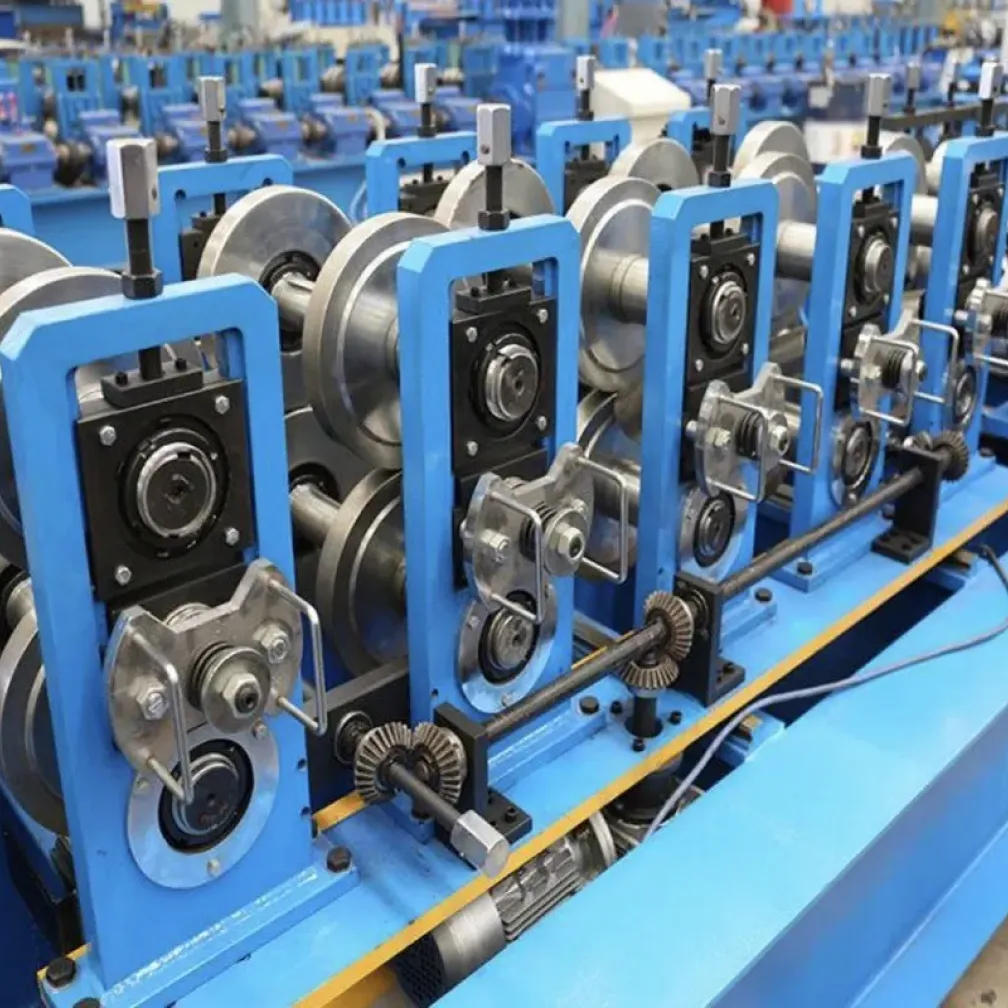
Transmission: a gearbox with spiral bevel gears holds forming torque stable on 3 mm and heavier strip and suits continuous multi-shift running. Chain drive is the economical option for 1-3 mm light-gauge production with moderate daily output.
Mill structure: the arch frame keeps both roll shafts supported at two ends under load, which limits shaft deflection on thick strip and keeps flange angles consistent along the full purlin length.
Punching and cutting: multi-station hydraulic punching places web and flange holes before forming, with positions set on the touch screen from the drawing. The servo tracking cut-off shears the moving strip, so cut length stays accurate at full line speed and the mill never stops for cutting.
Main Applications
- Roof purlins and wall girts for steel structure workshops, warehouses and logistics buildings
- C sections for ground-mounted and rooftop solar PV support structures
- Chassis and frame members for trailers, trucks and agricultural machinery
- Support steel for racking, platforms and municipal engineering
C Purlin or Z Purlin: How To Choose
C purlins have a symmetrical section. They install directly on cleats and suit simply supported spans, wall girts and positions where sections meet end to end. Z purlins have offset flanges that nest into each other, so they lap over supports and carry continuous spans with less material. A project that mixes roof and wall sections often needs both. The mill can be built as a dedicated C line, or as a C/Z interchangeable line that switches sections from the control panel without roller replacement. State the required sections at inquiry stage and the tooling is designed accordingly.
What To Prepare Before Requesting a Quote
- Section drawing with web depth, flange width, lip size and tolerances
- Strip thickness range and material grade, such as Q235, Q355 or galvanized strip
- Hole pattern drawing if inline punching is required
- Target output in meters per minute or tons per shift
- Workshop voltage, phase and frequency, plus preferred brands for PLC and electrical parts
With these five items, the line configuration, pass count, motor power and delivery schedule can be fixed in one quotation round.
FAQ
Can one machine produce several C purlin sizes?
Yes. Within the designed tooling range, size change is set on the touch screen and made by automatic or manual adjustment of the mill stands. Rollers do not need to be replaced for size changes inside the same section family.
What strip thickness can the line handle?
The standard build runs 1-3 mm strip. For heavier sections, 3-5 mm and 6-8 mm configurations are built with a gearbox transmission, larger shafts and a reinforced cut-off unit.
How are bolt holes produced?
Holes are punched inline by multi-station hydraulic units before the strip enters the mill. Hole diameter, pitch and position are entered on the HMI from the hole pattern drawing, and the servo feeder keeps pitch accuracy at full speed.
What is the delivery time?
A standard-configuration line takes 30-45 days from order confirmation. A fully customized line with stacking and strapping takes 60-90 days. Every line completes a 48-hour trial run with the order material before packing.
Who installs the line at the buyer site?
THRONCH sends engineers for on-site installation, alignment and commissioning, which normally takes 3-5 days. Operator training is completed during commissioning, and technical inquiries receive a response within 24 hours afterward.