What an ERW Tube Mill Line Produces
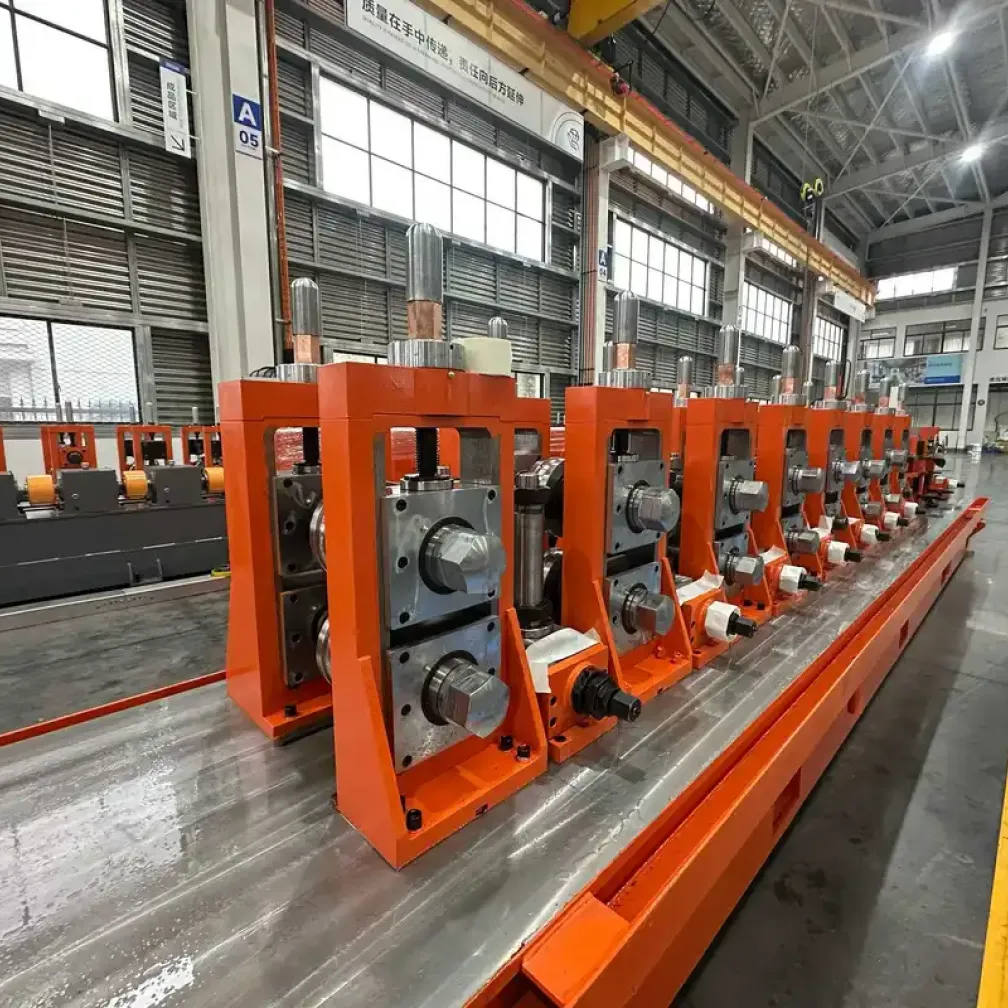
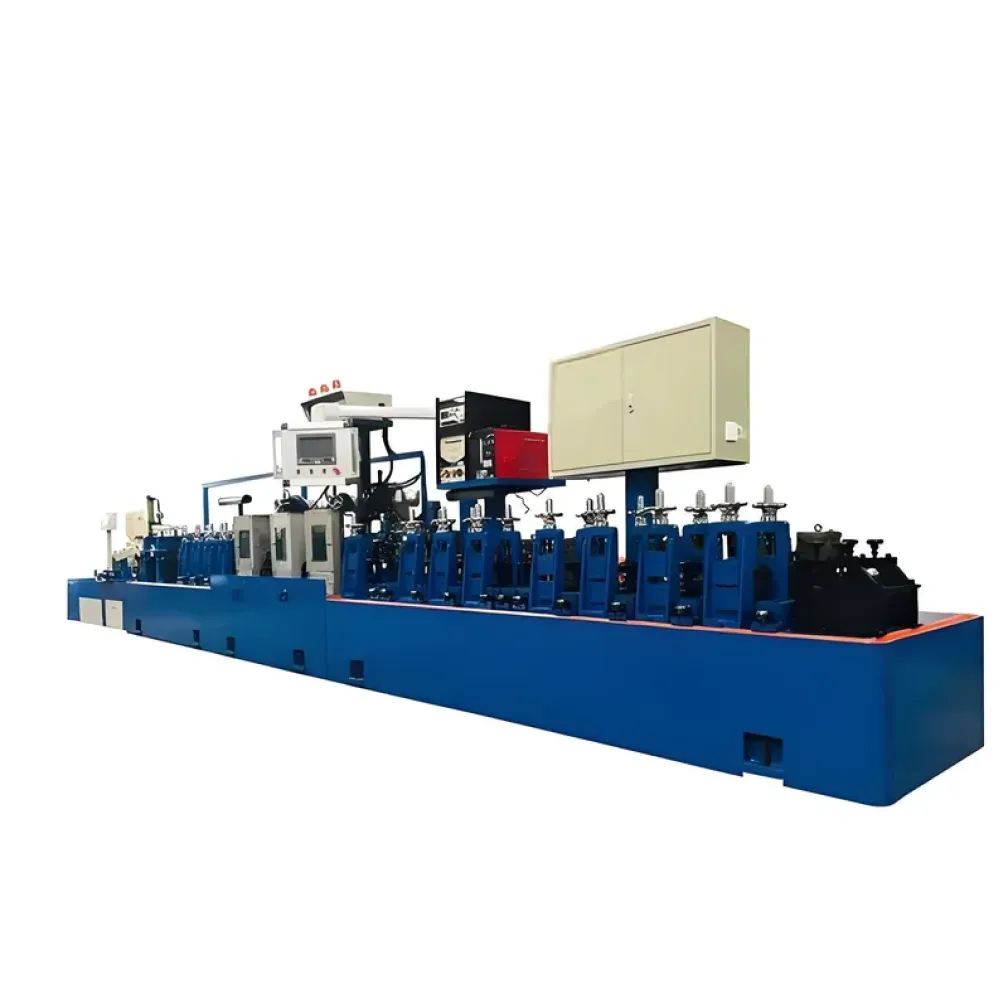
ERW stands for electric resistance welding. On an ERW tube mill line, steel strip passes through a series of roll stands that fold it into a round tube with abutting edges, and a high-frequency current heats those edges to forging temperature so they fuse under pressure into a longitudinal weld seam. No filler metal is involved. The tube is then cooled, sized to final dimensions, straightened and cut to length. The line on this page covers round pipe from 59 to 152 mm and square or rectangular tube from 10 to 200 mm, in wall thicknesses of 1.5-4 mm, for structural, mechanical and conveyance applications.
Process Flow of the Line
- Hydraulic uncoiling and strip leveling
- Shear and butt welding with loop storage for continuous running
- Forming mill that closes the strip into a round
- High-frequency welding station and external scarfing
- Cooling section, sizing mill and straightening unit
- Cold saw cut-off to ordered lengths
- Automatic palletizing and intelligent unloading
The loop storage ahead of the mill decouples coil changes from production: the accumulator feeds strip while a new coil is welded on, so the welding station never loses temperature stability between coils.
HF Welding Decides Tube Quality
The welding station is the core of any ERW line. Two power configurations are available. High-frequency induction welding transfers energy to the strip edges through a coil without physical contact, which suits general structural and conveyance pipe. Solid-state HF welding offers higher electrical efficiency and precise heat control on thin walls and demanding material grades. In both cases, stable heat input is what keeps the weld seam narrow, the heat-affected zone small and the seam strength close to the parent strip. Sizing stands after cooling bring the tube to final diameter and roundness, and the straightener corrects any residual bow before cutting.
Round-to-Square or Direct Square
Square and rectangular tube can leave the mill by two routes. The round-to-square method welds a round tube first, then reshapes it in sizing stands; one round tooling set covers several square sizes, which keeps tooling cost down for multi-size producers. The direct square method forms the square section from flat strip and welds the corner-free side; it gives tighter control over corner radii and flatness, which structural tube markets increasingly specify. The choice depends on the size list and the target standard, and it is fixed in the mill layout at order stage.
Why a Cold Saw at the Cut-Off
Friction saws cut fast but leave heat tint and burr that later need grinding. A cold saw runs at low speed with a toothed blade, so the cut face comes off clean, square and free of heat discoloration. For tube that goes directly to fabrication or galvanizing, this removes a finishing step and keeps the mill competitive on delivered quality rather than on speed alone.
Main Applications
- Construction scaffolding and shoring pipe
- Fire fighting, water supply and drainage pipe
- Steel structure columns and support tubes
- Solar mounting, greenhouse and agricultural framework tube
- Furniture, decorative and automotive tube
- Highway guardrail and mechanical structural tubes
What To Prepare Before Requesting a Quote
- Size list: pipe diameters or tube dimensions with wall thicknesses
- Material grade and strip specification for the target standard
- Round-to-square or direct square preference, if square tube is in the mix
- Cut lengths and monthly output target per size
- Site power supply and preferred electrical component brands
FAQ
How is ERW pipe different from pipe made from solid billet?
ERW pipe is formed from strip and welded along a longitudinal seam. Billet pipe is pierced from a solid round and carries no weld. For structural, conveyance and general mechanical duty, ERW pipe meets the applicable standards at a much lower production cost, which is why it dominates these markets.
Which HF welding type should the line use?
High-frequency induction welding covers general structural and conveyance pipe economically. Solid-state HF suits thin walls and higher-strength grades where heat control is critical. The size list and material grade in the inquiry decide the recommendation.
Can one line produce both round pipe and square tube?
Yes. With the round-to-square route, square sizes are reshaped from welded round tube in the sizing section. With direct square tooling, square tube is formed and welded in its final shape. Both routes exist on this line and are specified at order stage.
How long does a size changeover take?
A diameter change inside the tooling range requires roll and guide adjustment. Moving outside the covered range takes a roll set exchange. Planned size lists are quoted with realistic changeover times so shift schedules can be built around them.
What delivery and installation terms apply?
Standard lines ship in 30-45 days and customized configurations in 60-90 days, after weld trials and a full-line test in the factory. THRONCH engineers handle installation and commissioning on site and train the mill crew before handover.