What a Square and Rectangular Tube Mill Produces
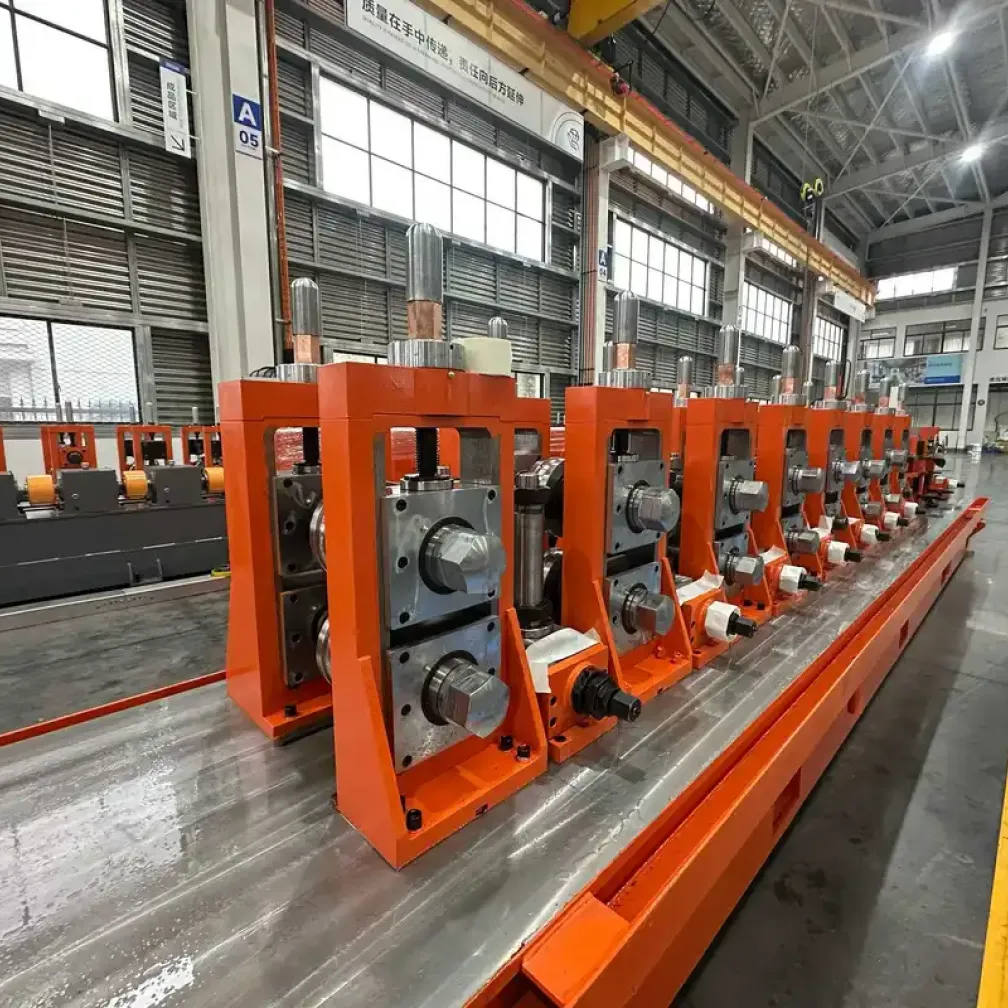
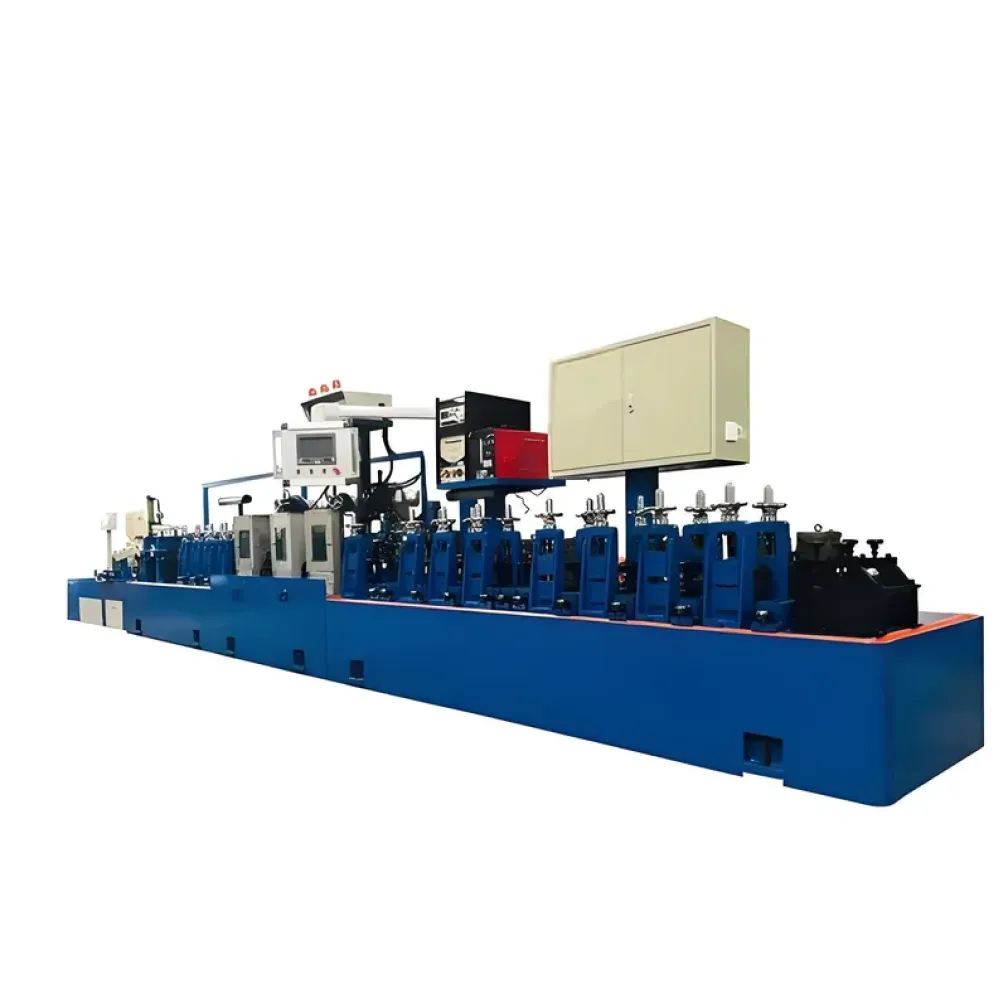
Square and rectangular hollow sections, usually abbreviated SHS and RHS, are the standard structural tube products of modern construction: columns, beams, trusses, frames and bracing. Their flat faces simplify connections, and the closed section resists torsion far better than open profiles of the same weight. A square and rectangular tube mill produces these sections from steel strip in a continuous welded process: forming, high-frequency welding, cooling, sizing, straightening and cold saw cutting, ending in automatic palletizing. The mill on this page covers the 10-200 mm section range in wall thicknesses of 1.5-4 mm.
Two Production Routes: Round-to-Square and Direct Square
The first strategic choice on a square tube project is the forming route, and it is fixed in the mill layout before manufacture.
Round-to-square: the strip is formed into a round and welded, then sizing stands progressively reshape the round tube into the final square or rectangular geometry. One round tooling set serves many square sizes, so tooling investment stays low and size changes inside the range are fast. The trade-off is limited control over corner radii, because the corners form by redistribution of the round shape.
Direct square: the strip forms directly toward the square or rectangular section and the seam welds on a flat side. Corner radii, face flatness and diagonal accuracy stay under direct tooling control, which is what structural markets writing to ASTM A500 or EN 10219 increasingly specify. Tooling cost per size is higher, so the route suits producers with a concentrated size list and structural customers.
Multi-size service centers lean toward round-to-square; structural tube specialists lean toward direct square. The customer size list and target standard decide the recommendation.
What Decides Section Quality
Four stations carry the quality of a hollow section. The forming stands set edge presentation at the weld. The HF welding station, induction or solid-state, fixes seam strength and the width of the heat-affected zone. The sizing stands bring the section to final dimensions and control corner geometry and face flatness. The straightener removes residual bow before the cold saw cuts to length. Consistent strip width and edge condition from the slitting supplier remain the outside factors that no mill can fully correct, so strip specification belongs in the purchase contract from the first order.
Main Applications
- Columns, beams and bracing for steel structure buildings
- Trusses and frames for industrial halls, warehouses and canopies
- Trailer, agricultural machinery and vehicle frames
- Solar mounting structures and greenhouse frames
- Furniture, fencing and general fabrication tube
What To Prepare Before Requesting a Quote
- Full size list with wall thicknesses and annual tonnage per size
- Target standard and market for the finished sections
- Production route preference, if already decided
- Material grades and strip supplier specification
- Site power supply and preferred automation level
FAQ
Should the mill use round-to-square or direct square?
Round-to-square keeps tooling cost low and covers many sizes with one round set, which suits multi-size producers. Direct square gives tighter corner radii and face flatness for structural standards, which suits concentrated size lists. The size list and target standard in the inquiry decide the layout.
Which section sizes can one mill cover?
This mill covers 10-200 mm across square and rectangular sections. Very small and very large ends of the range run at reduced speed, and sizes outside the range are quoted as separate tooling projects.
How does this mill relate to an ERW tube mill line?
A square and rectangular tube mill is an ERW line configured for hollow sections. The forming, welding and cut-off principles are shared; the difference sits in the sizing route and tooling, which this page covers for square and rectangular production.
How long does a size changeover take?
Inside the tooling range, a size change is a stand adjustment task completed within a shift. A route change or a size outside the covered range requires tooling exchange. Planned size lists are quoted with realistic changeover times.
What delivery and commissioning terms apply?
Standard mills ship in 30-45 days and customized configurations in 60-90 days, after weld trials and full-line testing. THRONCH engineers complete installation and commissioning on site and train the mill crew before handover.