What a Perforated Cable Tray Roll Forming Machine Produces
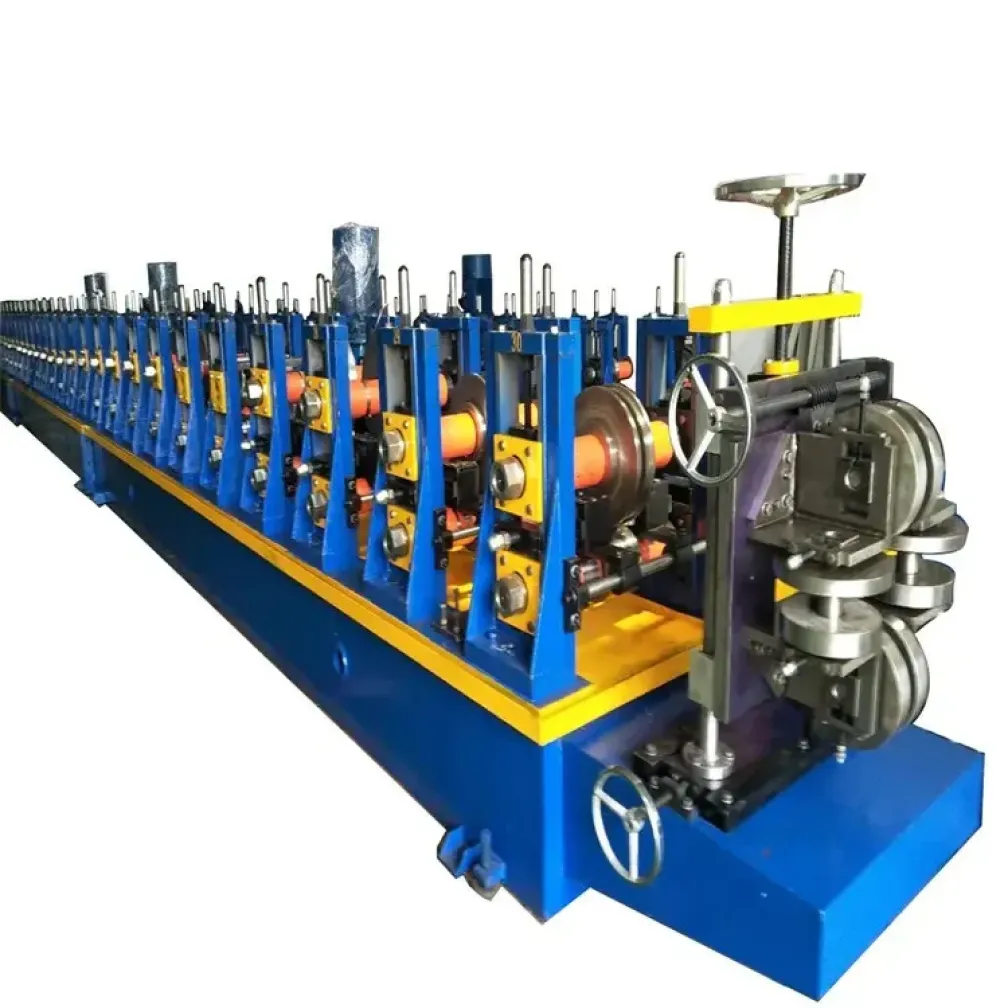
A perforated cable tray is a ventilated cable support: a U-shaped tray body whose bottom and side walls carry a regular pattern of punched holes, paired with a snap-on or bolted cover where cables need protection. Building services contractors install these trays along corridors, shafts and plant rooms to route power and data cables between equipment. The machine on this page produces tray bodies and covers from 0.8-2.5 mm strip: servo-fed punching creates the hole pattern, the mill forms the tray profile, and hydraulic cutting finishes each length.
Why the Perforations Matter
Cables under load generate heat, and heat trapped in a closed tray shortens insulation life. The perforated bottom opens an airflow path along the cable run, which is why electrical designers specify ventilated tray for power distribution routes and reserve solid-bottom tray for emission-sensitive or outdoor applications. For the tray producer, this means the hole pattern is part of the product standard: hole size, pitch and open area follow the tray specification of the market being served. Servo-fed punching on this line takes each pattern from the order drawing, and dies exchange when a project calls for a different standard.
One Line Across the Tray Size Range
Cable tray is a project business: every contract mixes widths and heights to match cable counts and routes. The line covers flat strip from 250 to 1250 mm, which spans the common tray width range, and tray width or height changes are adjustments on the mill rather than tooling replacements. Covers form on the same line from narrower strip. For producers quoting several projects at once, this adjustment range is what keeps one machine booked across different tray specifications.
Material Choice by Installation Environment
The material list follows the corrosion exposure of the installation. Pre-galvanized strip serves dry indoor routes economically. Hot-dip galvanized and spray-zinc-plated material suit plant rooms and semi-outdoor runs. Aluminium tray cuts weight on long spans and resists coastal air. Zinc-aluminium and zinc-magnesium coated strip extend service life in chemical and high-humidity environments. The line runs all of these materials, with roller surfaces prepared for coated strip so the zinc or alloy layer survives punching and forming intact.
Main Applications
- Power and data cable routes in industrial workshops and high-rise buildings
- Shopping malls, hotels and residential complexes
- Power stations, substations and new energy installations
- Rail transit, data centers and municipal engineering
- Petroleum and chemical plant cable management
What To Prepare Before Requesting a Quote
- Tray drawings with width, height, flange and hole pattern details
- Strip material and thickness for the target market
- The size mix expected across a typical order month
- Cover profile requirements, if covers are in the product plan
- Site power supply and preferred automation level
FAQ
What is the difference between perforated tray, ladder tray and trunking?
Perforated tray has a ventilated punched bottom with side walls, balancing cable support and heat release. Ladder tray uses two side rails with rung cross-members for maximum ventilation on heavy power cables. Trunking is an enclosed channel with a fixed cover for protection. Each type forms on dedicated tooling, and this line is configured for perforated tray with covers.
How are different tray widths handled on one line?
Width and height changes inside the covered range are mill adjustments set from the control panel. Tooling does not need replacement for size changes within the range, which suits producers serving multiple project specifications.
Can the line form both tray bodies and covers?
Yes. Tray bodies form from wider strip and covers from narrower strip on the same line. The punching stations handle the body hole pattern, and the cover profile runs without punching when the design requires.
Which material suits outdoor installation?
Hot-dip galvanized strip covers general outdoor duty. Coastal, chemical or high-humidity sites call for aluminium or zinc-magnesium coated strip. The installation environment stated in the inquiry decides the material preparation on rollers and dies.
What delivery and installation terms apply?
Standard lines ship in 30-45 days and customized configurations in 60-90 days, after a factory trial run on the order material. THRONCH engineers install and commission the line at the buyer site and train the operating team before handover.