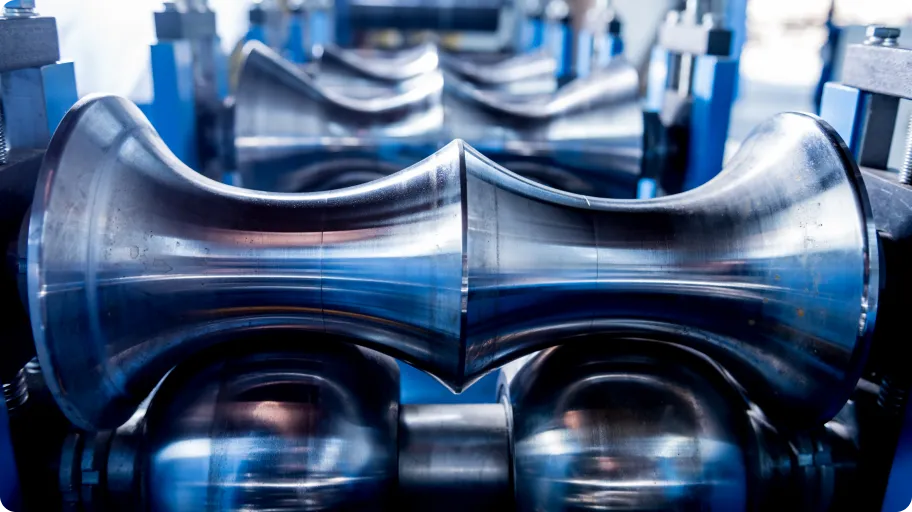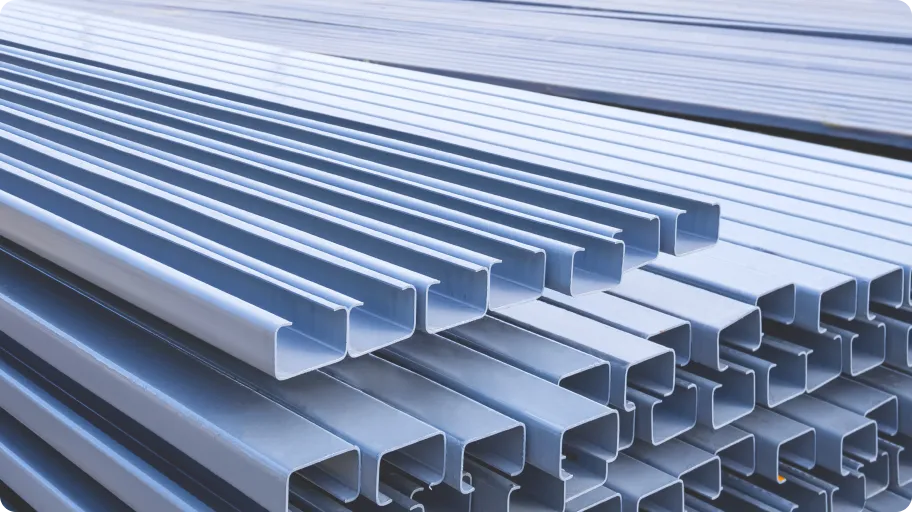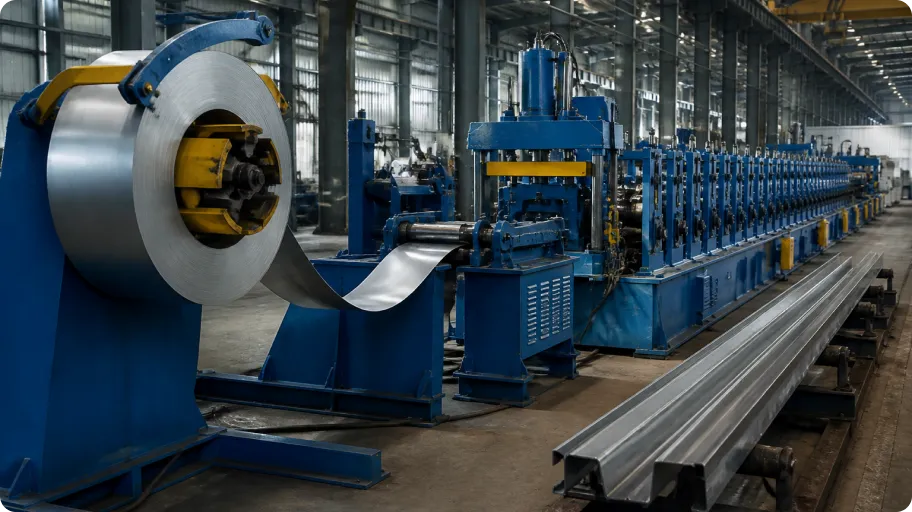


A cold roll forming machine is an automated production line that bends coiled metal strip into a constant cross-section profile at room temperature. The strip passes through a series of paired rollers, and each pair adds a small part of the final shape. After the last stand, flat strip has become a finished profile: a purlin, a guardrail beam, a cable tray, a strut channel, or a tube. The process runs continuously, so one line can produce long parts at high speed with very little scrap. This guide explains how the machine works, what components a line includes, which products it makes, and when roll forming is the right choice for a project.
How a Cold Roll Forming Machine Works
The working principle is progressive bending. A coil of steel or aluminum is loaded on a decoiler, straightened in a leveler, and fed into the forming mill. Inside the mill, 12 to 24 roll stands are mounted in a row. Each stand holds a pair of contoured rollers and bends the strip by only a few degrees. The deformation is shared across all stands, so the material is never overstressed at one point. Cracks and coating damage are avoided, and the finished profile keeps tight tolerances along its full length.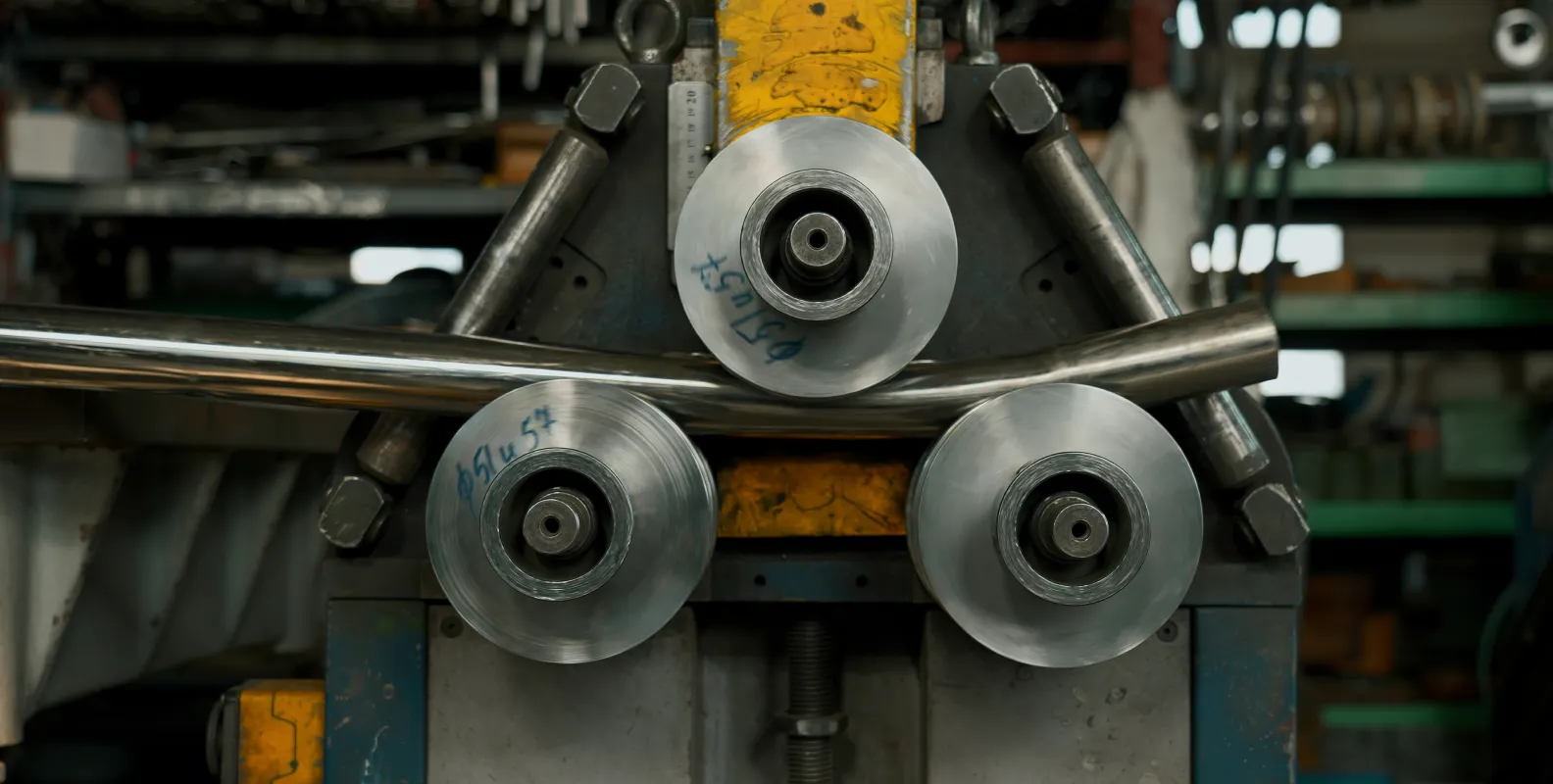
Cold means the metal is formed without heating. The strip stays well below its recrystallization temperature throughout the process. This has three practical results. First, there is no oxide scale on the surface. Second, pre-coated materials such as galvanized, ZAM, and color-coated strip keep their coating intact through the bends. Third, the bending work hardens the steel slightly, which adds strength at the corners of the profile.
Main Components of a Roll Forming Line
A complete line is more than the forming mill itself. The standard configuration includes the following units:
- Decoiler: holds the coil and releases the strip under controlled tension.
- Leveler: removes coil set and cross bow so the strip enters the mill flat.
- Punching unit: presses holes, slots, or notches before or after forming. Servo-controlled units keep hole position accurate at full line speed.
- Roll forming mill: the core of the line. Rollers machined from GCr15 bearing steel or Cr12 tool steel sit on driven shafts and shape the strip stand by stand.
- Cut-off unit: a flying saw or hydraulic shear cuts the moving profile to length without stopping the line.
- Run-out table and stacker: support and collect the finished parts.
- PLC control system: sets length, batch quantity, speed, and punching programs from a touch screen.
Many lines add inline operations such as embossing, curving, logo stamping, or high-frequency welding for tube production. Completing these steps in one pass removes secondary handling and keeps every part identical.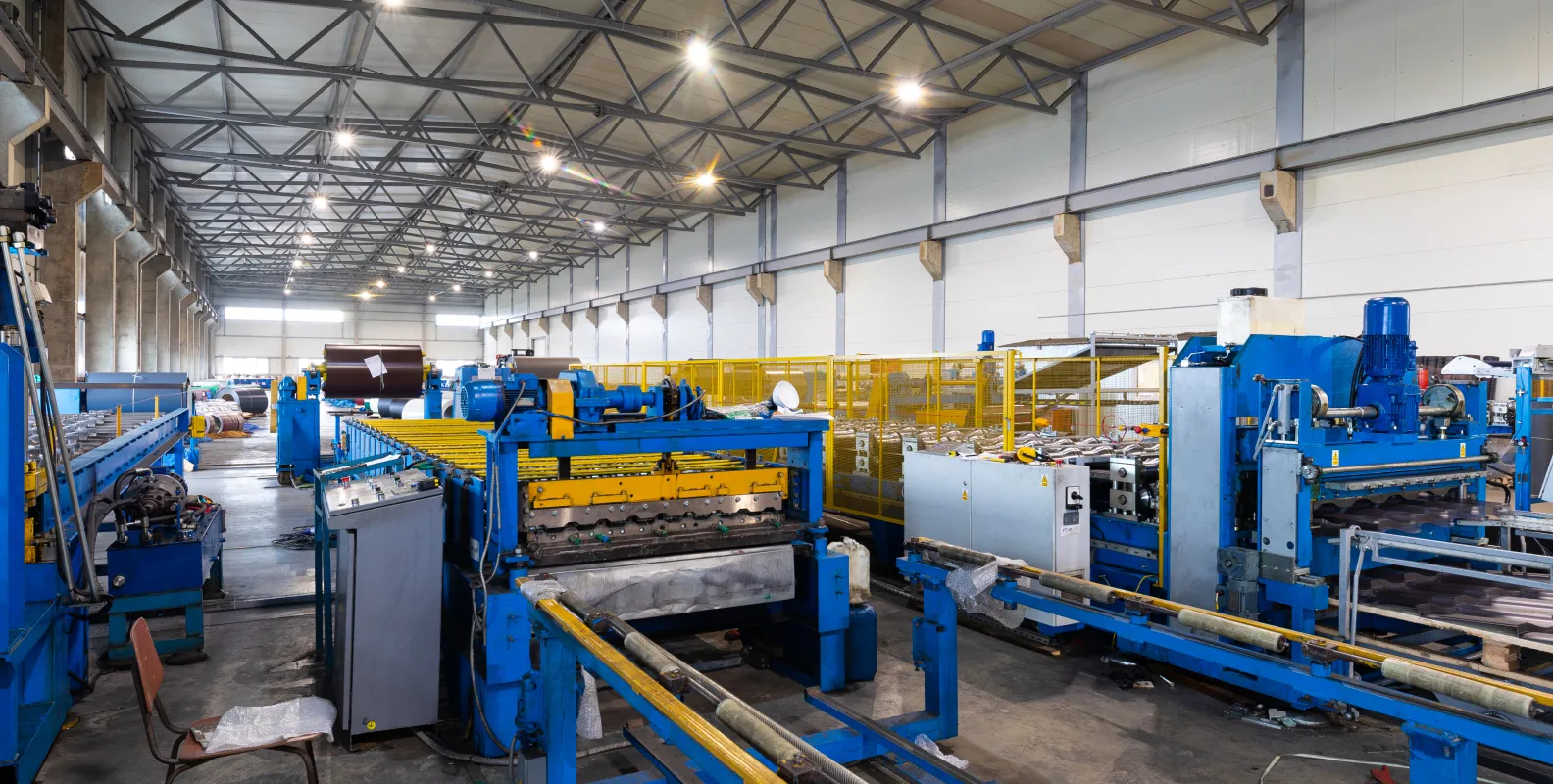
Roll Forming vs. Other Metal Forming Processes
Buyers often compare roll forming with press braking, stamping, extrusion, and hot rolling. All five are plastic forming processes, but each one occupies a different position in the market.
| Process | How It Works | Best Suited For | Main Limitation |
|---|---|---|---|
| Roll forming | Coiled strip bent progressively through roller dies at room temperature | Long constant-section profiles in high volume | Tooling cost and changeover time; constant section only |
| Press braking | A press brake bends sheet one stroke at a time | Short parts, small batches, flexible job-shop work | Low output per hour; length limited by the machine bed |
| Stamping | A die forms or cuts the sheet in a single press stroke | Small complex parts in very high volume | Expensive dies; limited part size; long profiles not feasible |
| Extrusion | Heated billet is pushed through a die opening | Aluminum profiles with complex closed sections | Mostly limited to soft metals; uneconomical for steel |
| Hot rolling | Steel billet heated above 1000 degrees and rolled to shape | Heavy standard sections such as I-beams and channels | Standard sections only; loose tolerances and surface scale |
The rule of thumb is simple. Thin sheet, constant cross-section, long parts, and large volume point to roll forming. Small batches and changing sections point to the press brake. Small complex parts point to stamping. Complex aluminum sections point to extrusion. Heavy standard structural steel comes from hot rolling. Roll forming holds the position where light-gauge profiles are needed in real volume, and that is where the steel construction, solar, and infrastructure markets are growing.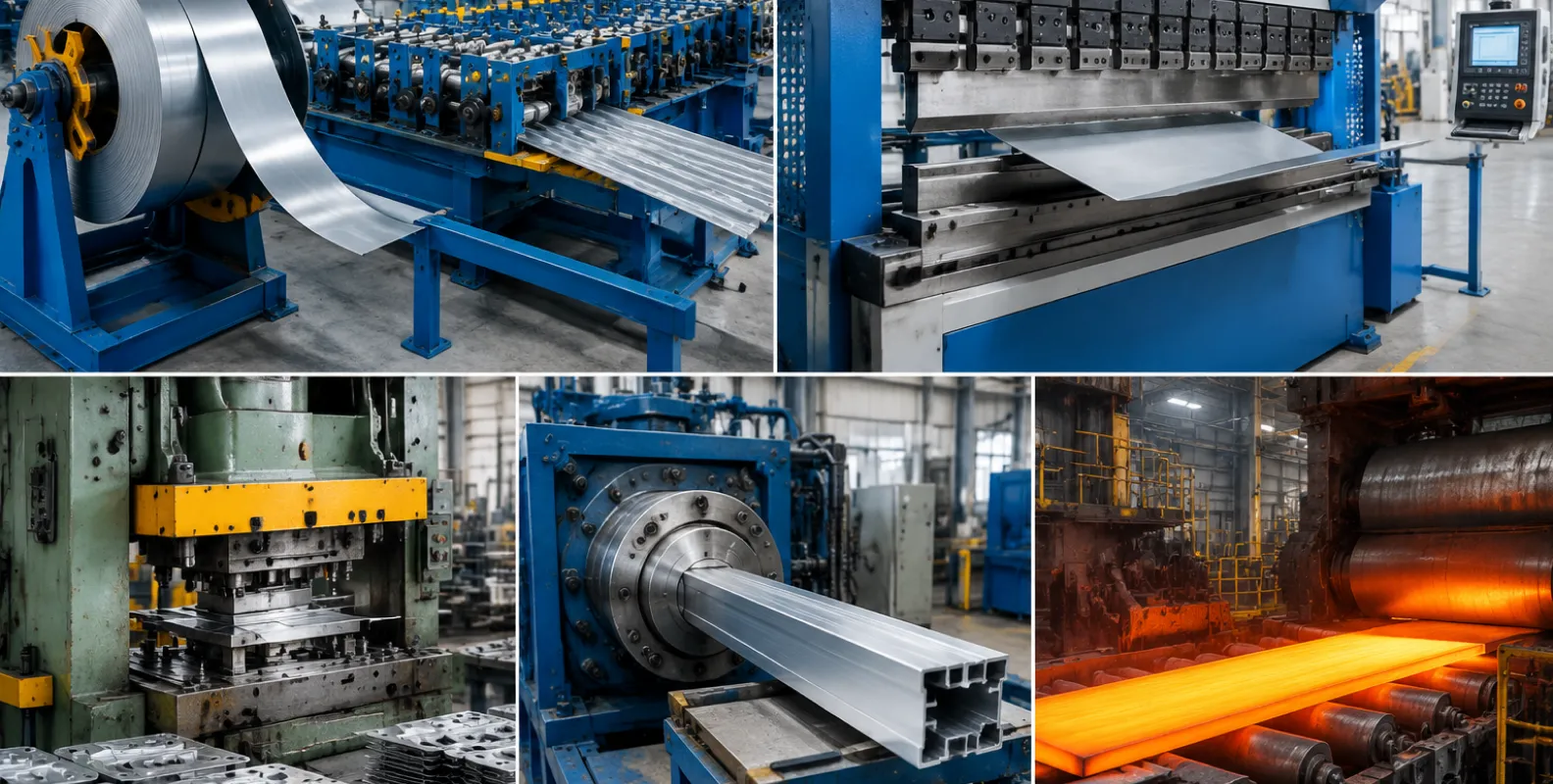
What Products Are Made on Roll Forming Lines
Roll formed profiles appear in almost every steel structure and industrial plant. The most common product families include:
- C and Z purlins for roof and wall support in steel buildings.
- Two-wave and three-wave guardrail beams for highways and bridges.
- Cable trays, trunking, and cable ladders for electrical installations.
- Strut channel and solar mounting profiles for pipe support and PV structures.
- Welded round, square, and rectangular tube for structural and mechanical use.
- Storage rack uprights, door frames, scaffold planks, and other building profiles.
What Is a Purlin?
A purlin is a secondary load-bearing member in a roof structure. It is a long beam laid horizontally across the main frames of a building. Its job is to carry the roof panels and transfer the loads from sheeting, snow, and wind into the primary structure. Wall girts do the same job on the side walls. A single warehouse can need thousands of meters of purlins in one or two sections, so purlins are a natural product for roll forming.
What Does CZ Mean on a Purlin Machine?
C and Z describe the cross-section shape of the purlin. A C purlin looks like the letter C and works well in simply supported, single-span installation. A Z purlin looks like the letter Z and can be lapped over the supports, so it forms a continuous span with better load capacity. A CZ purlin roll forming machine produces both sections on one line by adjusting or swapping the rollers. Steel structure contractors usually need both shapes on the same project, which is why the two-in-one CZ design has become the standard configuration in the industry.
Materials and Thickness Range
Roll forming handles most ductile sheet metals. The common choices are mild carbon steel such as Q235 and Q355, high-strength grades such as S355MC and Q700 for guardrail and structural parts, hot-dip galvanized and ZAM coated strip for corrosion protection, color-coated strip for visible building parts, plus stainless steel and aluminum for special applications. Thickness usually falls between 0.3 mm and 6 mm. Light ceiling and framing profiles sit at the thin end. Purlins and strut channel typically run 1.5 mm to 3 mm. Guardrail beams use 2.0 mm to 4.5 mm strip.
One buying point matters here. The machine is sized by material yield strength and thickness, and the profile name alone says nothing about machine size. A line designed for 4.5 mm high-strength guardrail strip needs heavier shafts, larger diameter rollers, and more forming power than a line for 1.5 mm purlins. When you request a quotation, state the full grade and thickness range you plan to run.
When Roll Forming Is the Right Choice
Roll forming earns its cost back when the order book matches the process. The process fits best when:
- the product has a constant cross-section along its length;
- parts are long, or cut to many different lengths from one profile;
- annual volume is large enough to spread the tooling cost;
- tolerances and surface quality matter, for example when parts are galvanized or color coated before forming;
- holes, slots, or notches are needed and can be punched inline.
Scrap in roll forming typically stays in the 1% to 3% range, and the same rollers hold dimension over millions of meters of strip. For small batches, changing sections, or short complex parts, a press brake or a stamping press is usually more economical. An honest supplier will tell you which side of the line your product sits on before you commit to tooling.
How to Specify a Roll Forming Line Before You Buy
A clear specification shortens the design stage and avoids disputes at acceptance. Prepare these items before you ask for a quotation:
- Profile drawing with full dimensions and tolerances.
- Material grades and the complete thickness range.
- Target output in meters per minute or pieces per shift.
- Hole patterns and their positions relative to the profile ends.
- Cut length range and length tolerance.
- Automation level, from manual loading up to a fully automatic roll forming machine with servo punching, automatic stacking, and packing.
- Available plant length, power supply, and crane capacity.
With these points fixed, a manufacturer can confirm stand count, shaft diameter, motor power, and line layout within days, and quote a line that matches your product instead of a generic machine.
Work With a Roll Forming Line Manufacturer
THRONCH designs and builds cold roll forming lines for purlins, guardrail, cable tray, strut channel, welded tube, storage rack, door frames, and scaffold planks. Send us your profile drawing and production target, and our engineers will return a line proposal with layout and technical data. Standard configurations are completed in 30 to 45 days, and every line passes a 48-hour trial run with real material before it leaves our factory. Contact us at amy@thronch.com to discuss your project.
-

THRONCH
Cold Roll Forming Machine Manufacturer
THRONCH is a direct manufacturer specializing in custom cold roll forming lines and welded pipe mills. With over a decade of engineering expertise, we share technical insights and deliver high-precision