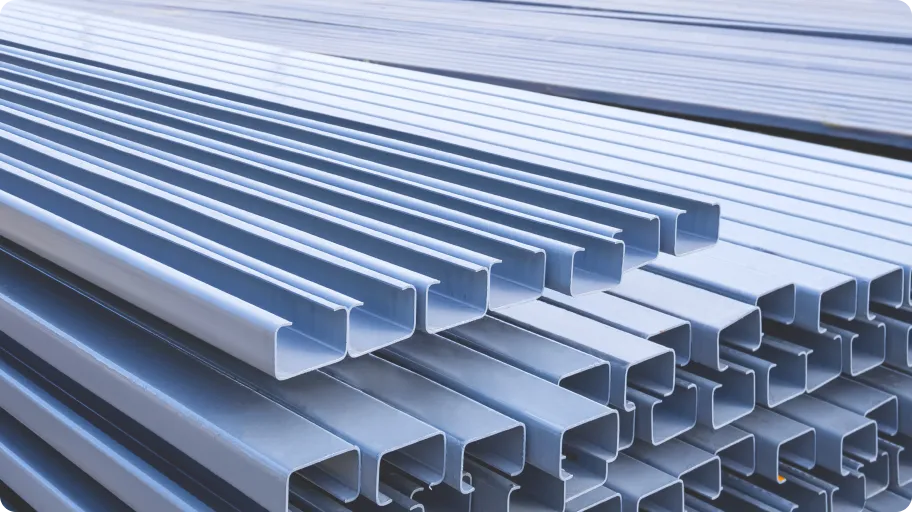


Square and rectangular steel tubes are hollow structural sections produced to fixed outside dimensions and wall thicknesses. Square tube (SHS) runs from 20 x 20 mm up to 400 x 400 mm and beyond, and rectangular tube (RHS) from 40 x 20 mm up to about 400 x 300 mm. Standard lengths are 6 m and 12 m. The tables below list the common metric sizes with their theoretical weight per meter, so you can estimate cost, load, and transport weight before you order. All weights are calculated for carbon steel at 7850 kg/m3 with sharp corners; published mill tables with corner radii run about 1% lower.
How Hollow Section Sizes Are Written
Four abbreviations cover this product family. SHS means square hollow section, with two equal sides, written as side x side x wall thickness, for example 100 x 100 x 5 mm. RHS means rectangular hollow section, written as depth x width x wall thickness, for example 200 x 100 x 8 mm. CHS is the circular version, specified by outside diameter and wall. HSS, hollow structural section, is the North American umbrella term used in ASTM A500 and AISC design guides. When a drawing or price list says HSS 4 x 4 x 1/4, it is the same product a European supplier calls SHS 100 x 100 x 6.4.
Size designation always uses outside dimensions. The inside opening is simply the outside size minus twice the wall thickness. This matters for fit-up: a 100 x 50 x 4 mm RHS has an inside opening of 92 x 42 mm, which decides what fits inside for telescoping or connection details.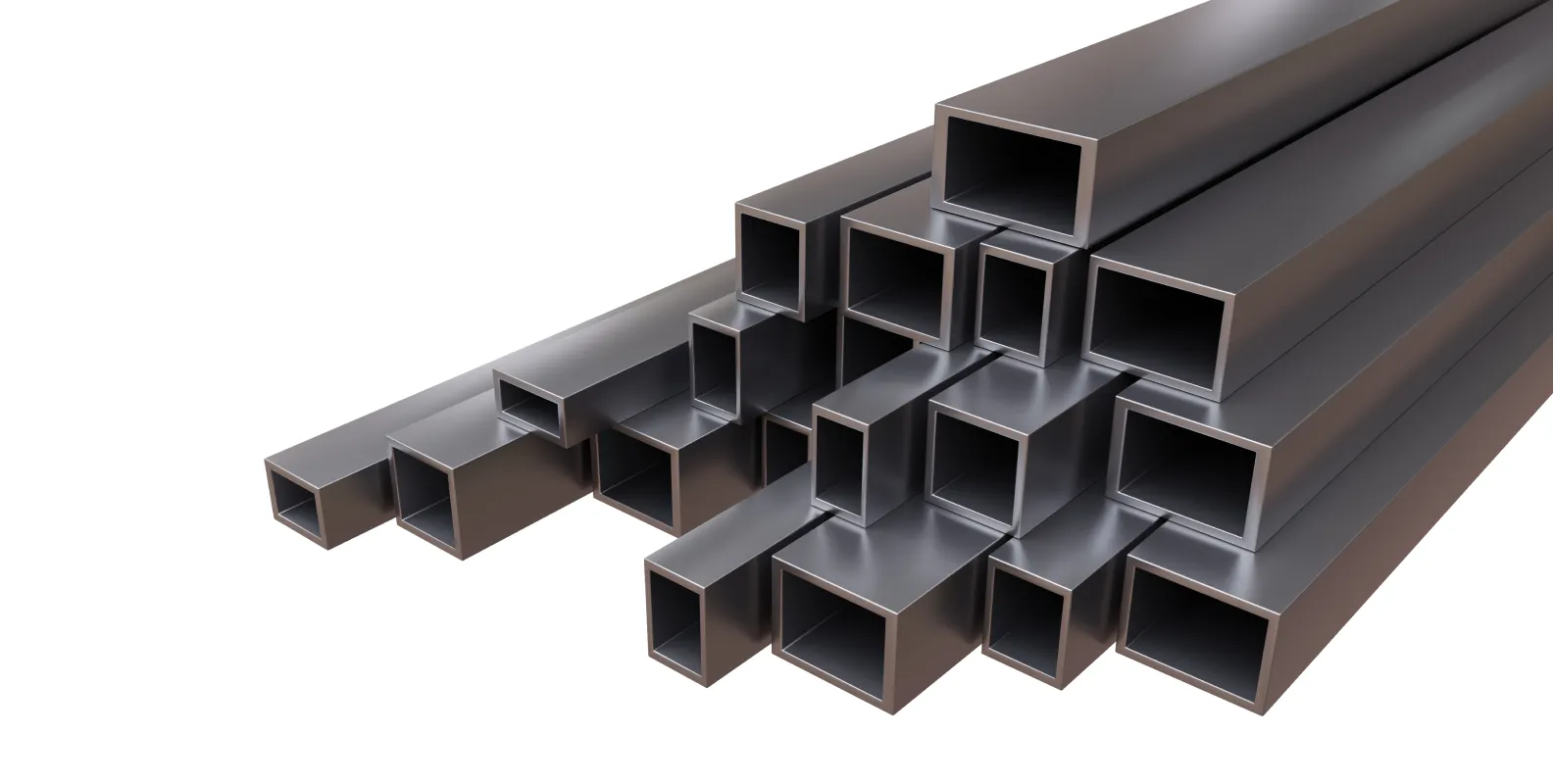
Square Tube (SHS) Size and Weight Chart
The table covers the standard square sizes used in fabrication, from light furniture and gate sections up to structural columns. Weights are theoretical values per meter and per standard 6 m length.
| Size (mm) | Wall Thickness (mm) | Weight (kg/m) | Weight per 6 m Length (kg) |
|---|---|---|---|
| 20 x 20 | 1.5 | 0.87 | 5.2 |
| 20 x 20 | 2 | 1.13 | 6.8 |
| 25 x 25 | 1.5 | 1.11 | 6.6 |
| 25 x 25 | 2 | 1.44 | 8.7 |
| 30 x 30 | 2 | 1.76 | 10.6 |
| 30 x 30 | 2.5 | 2.16 | 13.0 |
| 40 x 40 | 2 | 2.39 | 14.3 |
| 40 x 40 | 2.5 | 2.94 | 17.7 |
| 40 x 40 | 3 | 3.49 | 20.9 |
| 50 x 50 | 2.5 | 3.73 | 22.4 |
| 50 x 50 | 3 | 4.43 | 26.6 |
| 50 x 50 | 4 | 5.78 | 34.7 |
| 60 x 60 | 3 | 5.37 | 32.2 |
| 60 x 60 | 4 | 7.03 | 42.2 |
| 80 x 80 | 3 | 7.25 | 43.5 |
| 80 x 80 | 4 | 9.55 | 57.3 |
| 80 x 80 | 5 | 11.77 | 70.6 |
| 100 x 100 | 4 | 12.06 | 72.3 |
| 100 x 100 | 5 | 14.91 | 89.5 |
| 100 x 100 | 6 | 17.71 | 106.3 |
| 120 x 120 | 5 | 18.05 | 108.3 |
| 120 x 120 | 6 | 21.48 | 128.9 |
| 150 x 150 | 5 | 22.76 | 136.6 |
| 150 x 150 | 6 | 27.13 | 162.8 |
| 200 x 200 | 6 | 36.55 | 219.3 |
| 200 x 200 | 8 | 48.23 | 289.4 |
Sizes between 40 x 40 mm and 150 x 150 mm cover most building and fabrication demand. Sections above 200 x 200 mm are used for columns and long-span trusses and are usually ordered against a project specification.
Rectangular Tube (RHS) Size and Weight Chart
| Size (mm) | Wall Thickness (mm) | Weight (kg/m) | Weight per 6 m Length (kg) |
|---|---|---|---|
| 40 x 20 | 1.5 | 1.34 | 8.1 |
| 40 x 20 | 2 | 1.76 | 10.6 |
| 50 x 25 | 2 | 2.23 | 13.4 |
| 50 x 25 | 2.5 | 2.75 | 16.5 |
| 50 x 30 | 2.5 | 2.94 | 17.7 |
| 50 x 30 | 3 | 3.49 | 20.9 |
| 60 x 40 | 2.5 | 3.73 | 22.4 |
| 60 x 40 | 3 | 4.43 | 26.6 |
| 60 x 40 | 4 | 5.78 | 34.7 |
| 80 x 40 | 3 | 5.37 | 32.2 |
| 80 x 40 | 4 | 7.03 | 42.2 |
| 80 x 60 | 3 | 6.31 | 37.9 |
| 80 x 60 | 4 | 8.29 | 49.7 |
| 100 x 50 | 3 | 6.78 | 40.7 |
| 100 x 50 | 4 | 8.92 | 53.5 |
| 100 x 50 | 5 | 10.99 | 65.9 |
| 120 x 60 | 4 | 10.80 | 64.8 |
| 120 x 60 | 5 | 13.34 | 80.1 |
| 120 x 80 | 4 | 12.06 | 72.3 |
| 120 x 80 | 5 | 14.91 | 89.5 |
| 150 x 100 | 5 | 18.84 | 113.0 |
| 150 x 100 | 6 | 22.42 | 134.5 |
| 150 x 100 | 8 | 29.39 | 176.3 |
| 200 x 100 | 5 | 22.76 | 136.6 |
| 200 x 100 | 6 | 27.13 | 162.8 |
| 200 x 100 | 8 | 35.67 | 214.0 |
Rectangular sections carry bending loads most efficiently when the deep side stands vertical, because the section modulus about the strong axis is much higher than about the weak axis. This is why purlins, beams, and trailer frames are usually RHS rather than SHS.
How to Calculate Tube Weight Per Meter
The weight of any hollow section comes from one formula. Cross-section area equals the outside rectangle minus the inside rectangle. Multiply by steel density and you get weight per meter:
W (kg/m) = 0.00785 x [A x B - (A - 2t) x (B - 2t)]
Worked example: a 100 x 50 x 4 mm RHS has an area of 5000 minus 3864, which is 1136 mm2. Weight is 1136 x 0.00785 = 8.92 kg/m, and a 6 m length weighs about 53.5 kg. For square sections, A and B are the same number. The formula gives the theoretical sharp-corner weight; standards such as EN 10219 publish masses with corner radii deducted, which read about 1% lower. For freight and cost estimation the formula value is safe, because it errs slightly on the heavy side.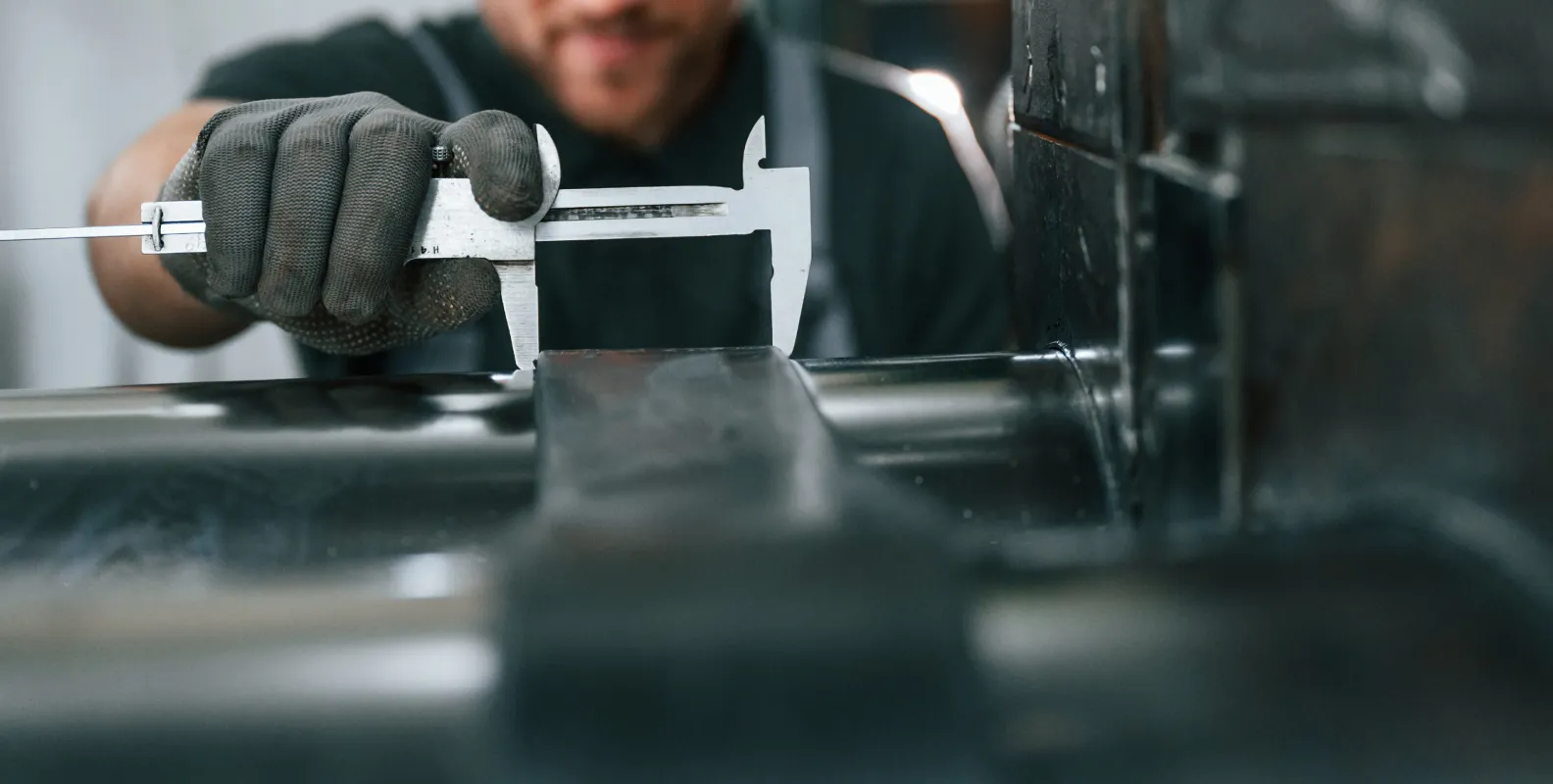
Standards and Grades: ASTM A500 and EN 10219
Two standards dominate international trade in welded square and rectangular tube. ASTM A500 covers cold-formed welded carbon steel structural tubing for the US market, with Grade B and Grade C as the common choices for shaped sections. EN 10219 covers cold-formed welded hollow sections in Europe and most export markets, with grades S235JRH and S355J2H, where the H suffix marks hollow section delivery condition.
One distinction buyers miss is EN 10210 versus EN 10219. The same 100 x 100 x 5 section exists in both. EN 10210 is hot-finished, with uniform properties through the wall and tighter corner geometry. EN 10219 is cold-formed from welded strip, with work-hardened corners and a lower price. For general structures EN 10219 is the economical default. For dynamic loads, low temperatures, or critical members, hot-finished EN 10210 or a grade with guaranteed impact energy (J2 at minus 20 degrees) is the safer call. Write the standard and grade into your inquiry, because size alone does not define the product.
How to Choose Size and Wall Thickness
Selection starts from the job the section does. Columns and posts need equal stiffness in both directions, so SHS is the natural choice. Beams, purlins, and joists bend about one axis, so RHS with the deep side vertical gives more capacity per kilogram of steel. Frames that mix both duties often combine the two.
Wall thickness is where money is made or lost. Tube is sold by weight, so every extra millimeter of wall adds cost to every meter you buy or produce. A 100 x 100 mm SHS at 4 mm weighs 12.06 kg/m; the same section at 6 mm weighs 17.71 kg/m, 47% heavier for the same outside look. Over-specifying wall thickness wastes steel across the whole project. Under-specifying creates deflection and safety problems. The practical route is to let the structural engineer fix the size and grade from the load case, then hold the wall tolerance in the purchase contract. EN 10219 typically allows plus or minus 1% on outside dimensions and plus or minus 10% on wall thickness, so the delivered weight can differ from the theoretical table by several percent.
Standard mill lengths are 6 m and 12 m, with cut-to-length service common. Plan your cutting list against these lengths before ordering; a small change in part length can cut scrap from 15% down to almost nothing.
Producing These Sizes In-House
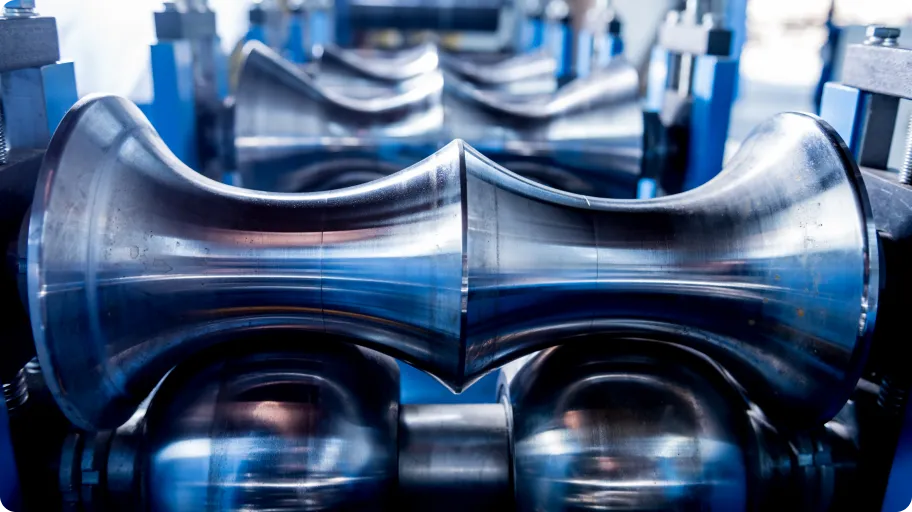
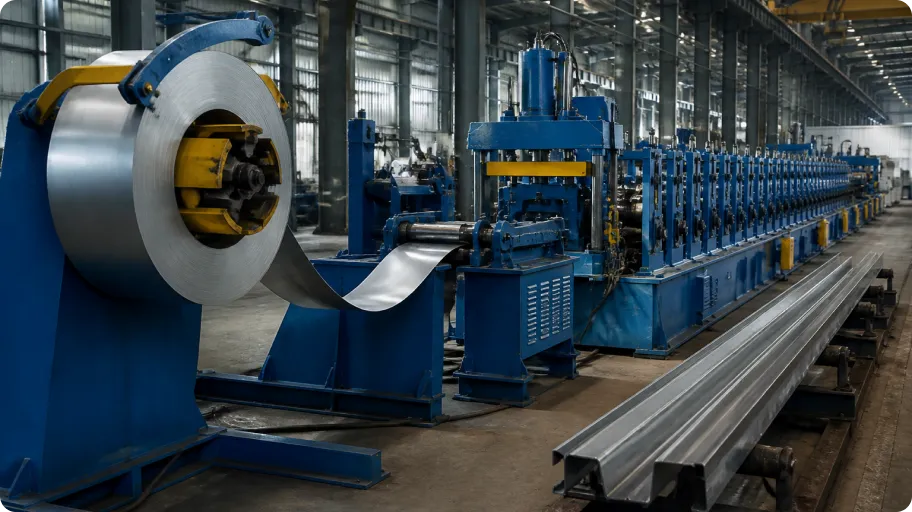
Fabricators and steel traders who buy square and rectangular tube in steady volume often reach a point where producing it in-house is cheaper than buying it. Every size in the tables above is made from steel strip on a cold roll forming machine with a welding unit, known as a tube mill. The strip is formed round, high-frequency welded, sized into the final square or rectangular shape, and cut to length by a flying cold saw.
One mill covers a family of sizes by changing roll sets. A typical square and rectangular tube mill in the mid range produces square sections from about 50 x 50 mm to 150 x 150 mm and matching rectangular sizes, in wall thicknesses from 1.5 mm to 4 mm, at speeds up to 60 m/min. Two forming routes exist: round-to-square, where a welded round tube is reshaped in sizing stands, and direct square, where the strip is formed into the final shape before welding. Round-to-square suits mills that also sell round tube; direct square gives better corner quality on thick walls. Larger lines extend to 200 x 200 mm, and dedicated ERW tube mill lines cover the round pipe range alongside. The full product family and line options are summarized on our pipe forming machine page.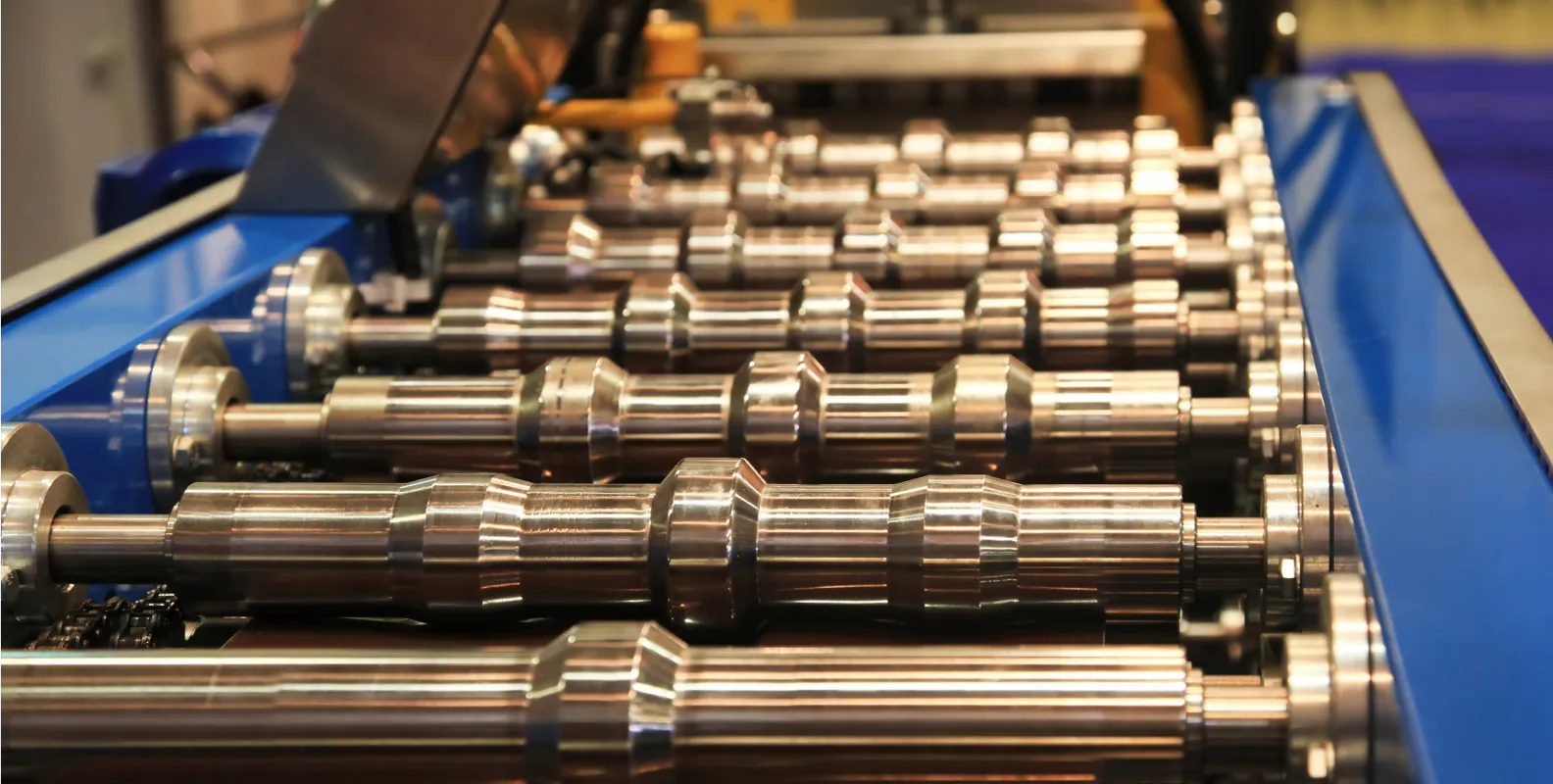
Get a Line Proposal for Your Size Range
THRONCH builds tube mills for square, rectangular, and round sections, sized to your wall thickness and output target. Send us your size list with monthly tonnage, and our engineers will return a mill configuration with roll set plan, layout, and delivery schedule. Standard lines are completed in 30 to 45 days and every mill passes a 48-hour trial run with real strip before packing. Contact us at amy@thronch.com with your drawings.
-

THRONCH
Cold Roll Forming Machine Manufacturer
THRONCH is a direct manufacturer specializing in custom cold roll forming lines and welded pipe mills. With over a decade of engineering expertise, we share technical insights and deliver high-precision