

ERW pipe is steel pipe made by cold forming flat steel strip into a round tube and welding the longitudinal seam with high-frequency electric current. ERW stands for electric resistance welding. No filler metal is added: the strip edges are heated to forging temperature and pressed together, so the weld comes from the base metal itself. ERW is the most common production route for welded steel pipe worldwide, covering roughly 1/2 inch to 24 inches in outside diameter, and it serves water and gas transmission, fire protection, structural work, scaffolding, and general engineering. This guide explains how ERW pipe is made, how the welding works, which standards apply, and how it compares with pipe pierced from solid billet.
How ERW Pipe Is Made
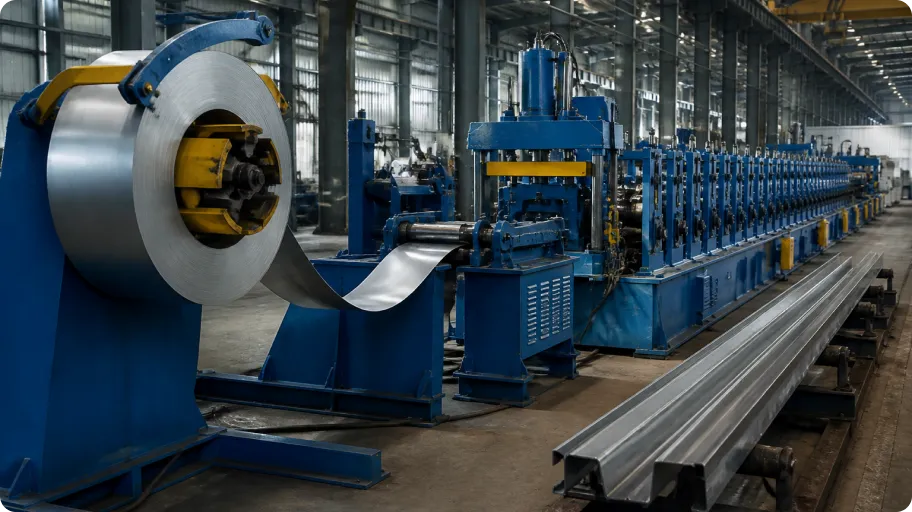
An ERW mill is a continuous automatic roll forming line. The coil enters at one end and finished cut-length pipe leaves at the other. The main stages are:
- Coil preparation: hot-rolled steel coil is slit to a strip width close to the pipe circumference, and the strip edges are milled clean for welding.
- Leveling and accumulation: the strip is flattened, and an accumulator stores enough strip to keep the line running while the next coil is loaded and joined.
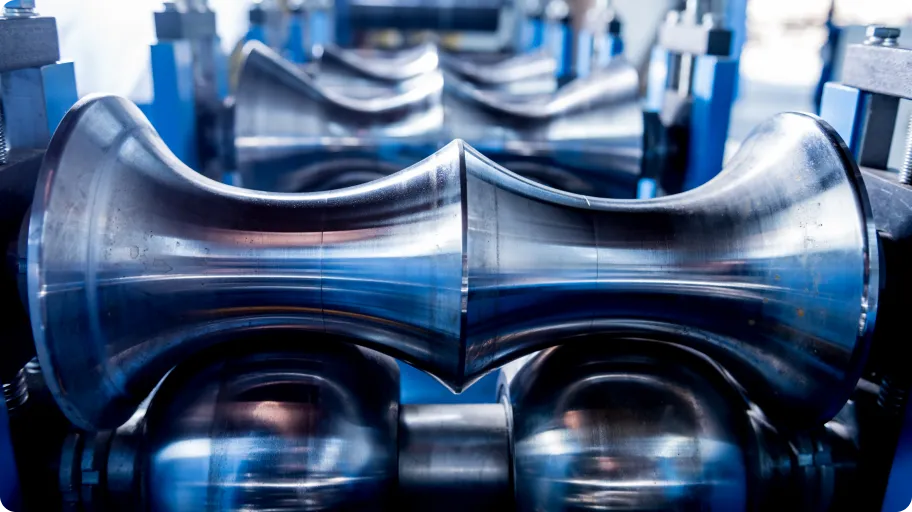
- Forming: a series of rolls bends the strip step by step into an open round tube. This forming stage is the same progressive bending principle used in every cold roll forming machine.
- Welding: the two edges are heated and forged together into a longitudinal seam, described in detail below.
- Flash removal: the raised burr left by the weld is scraped off the outside and inside surfaces.
- Seam heat treatment: the weld zone is reheated by induction and air cooled, which normalizes the grain structure around the seam.
- Sizing and straightening: sizing rolls bring the tube to final outside diameter and roundness.
- Cutting: a flying saw or cold saw cuts the moving tube to length without stopping the line.
- Inspection: the seam is checked by eddy current or ultrasonic testing, and pipes are hydrostatically tested, flattening tested, and measured before dispatch.
How High-Frequency ERW Welding Works
Modern ERW welding runs on alternating current at 100 to 800 kHz. Two electromagnetic effects do the work. The skin effect pushes the high-frequency current to the surface of the strip, and the proximity effect concentrates that current along the two facing edges just before they meet. The edges reach about 1430 degrees Celsius in a narrow zone, and squeeze rolls then forge them together. Oxides and impurities are expelled with a small amount of molten metal, which forms the burr that is removed afterward. Because the heat stays in a narrow band, the heat-affected zone is small and the rest of the tube keeps its original structure.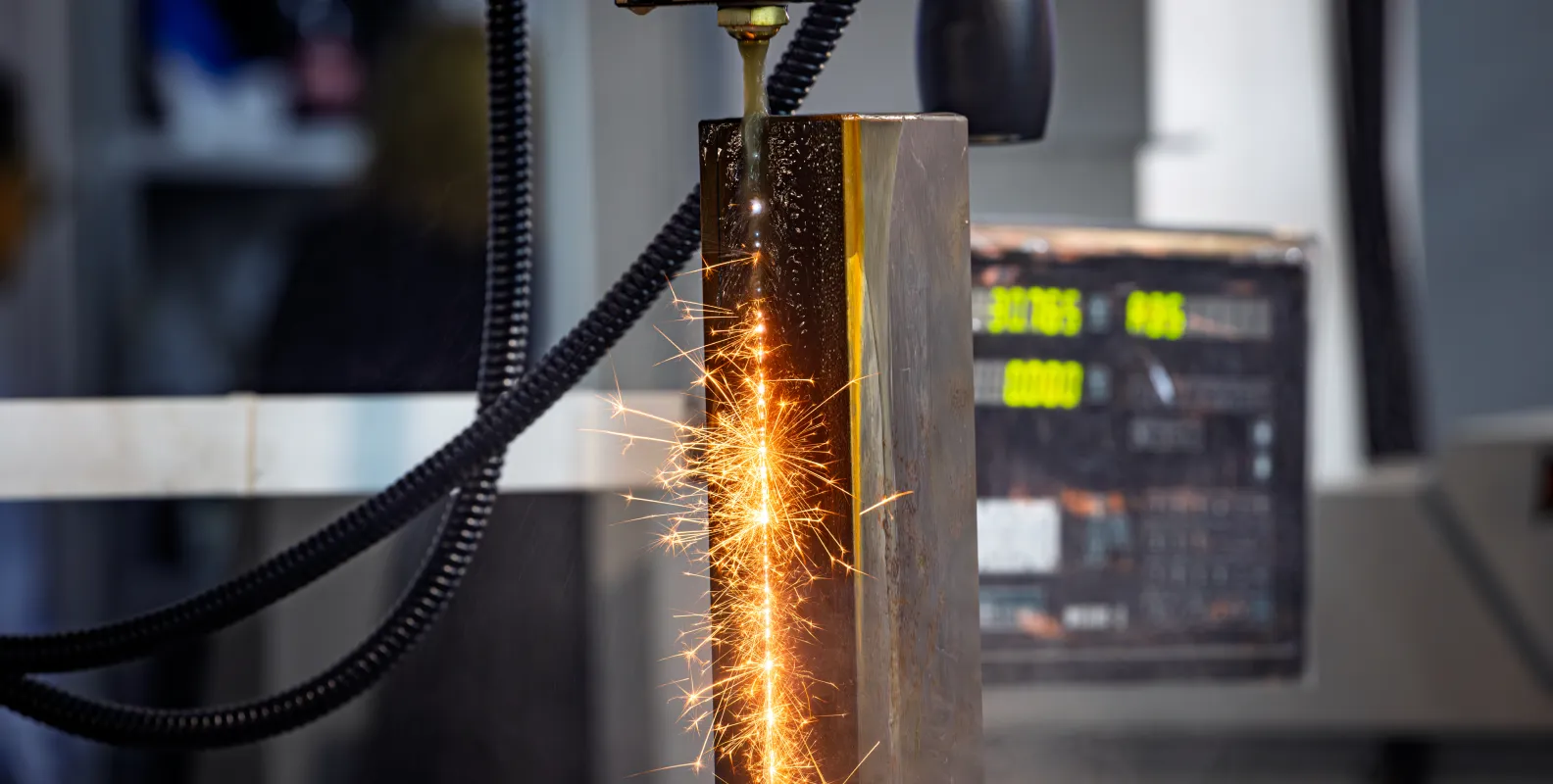
There are two equipment variants. High-frequency induction welding uses a coil wrapped around the tube and heats the edges without contact. Contact welding feeds the current through rotating copper electrode wheels that touch the strip edges. Both are proven; induction dominates on oil and gas pipe. It is worth knowing that ERW was not always this reliable: the original low-frequency process, used from the 1920s, produced seams prone to selective corrosion and hook cracks. High-frequency welding replaced it around 1970, and modern HF welds are accepted into API 5L line pipe grades.
ERW, LSAW, and SSAW: The Three Welded Pipe Routes
Welded pipe comes in three routes, and they divide the market by diameter. ERW forms a continuous tube from coil and owns the small and medium diameters up to 24 inches, at the highest line speeds. LSAW, longitudinal submerged arc welding, forms single steel plates into large-diameter pipe with a deep-penetration arc weld, typically 16 inches and above for high-pressure trunk lines. SSAW, spiral submerged arc welding, winds the strip into a helix, so one strip width can serve many diameters, which makes it common on large water pipelines. When a project needs diameters under 24 inches in real quantity, ERW is almost always the lowest-cost route. Above that size, or where thick walls are required on critical lines, the arc-welded routes take over.
ERW Pipe vs. SMLS Pipe
The standard comparison for ERW is SMLS pipe, which is pierced and rolled from a solid round billet and therefore carries no weld seam. The two routes differ in capability and cost:
| Item | ERW Pipe | SMLS Pipe |
|---|---|---|
| Raw material | Hot-rolled steel coil | Solid round billet |
| Forming route | Cold forming plus high-frequency welding | Billet piercing and hot rolling |
| Weld seam | One longitudinal seam | None |
| Typical OD range | 1/2 inch to 24 inches | 1/8 inch to 28 inches |
| Wall thickness accuracy | Excellent, set by the strip | Good, wider tolerance |
| Surface | Smooth and uniform | Rougher, with scale on hot-finished pipe |
| Relative cost | Lower | Higher |
| Best fit | Water and gas transmission, fire protection, structure, general engineering | Highest pressure, high temperature, critical refinery and boiler service |
For most transmission and structural work, ERW is the economical default and modern HF welds perform to the same line pipe grades as billet pipe. SMLS keeps its edge where service is most severe: very high pressure, high temperature, or aggressive media in critical systems. Write the service conditions into the specification and the route choice usually makes itself.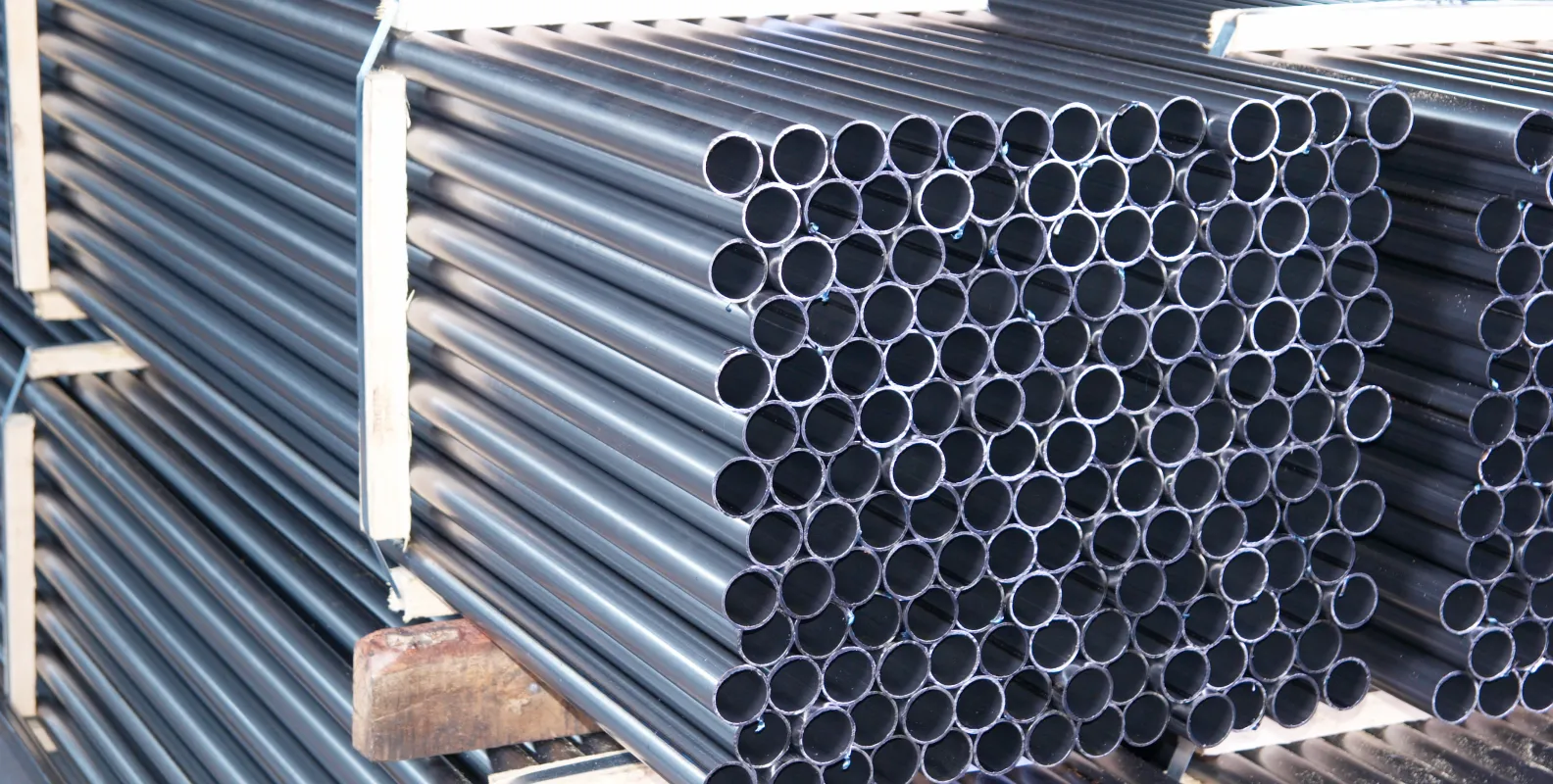
Standards and Grades for ERW Pipe
ERW pipe is ordered against a standard and a grade, and the standard defines the testing. The common ones are:
- API 5L: line pipe for oil and gas, PSL1 and PSL2, grades B through X70 and X80.
- ASTM A53 Type E: general pipe for pressure and mechanical use, Grade A and Grade B.
- ASTM A500: cold-formed structural tubing, including round sections.
- ASTM A795: fire sprinkler pipe.
- EN 10217: welded steel tubes for pressure purposes.
- EN 10219: cold-formed welded structural hollow sections.
One ordering habit saves disputes: specify the standard, the grade, and for API work the PSL level, plus OD, wall, length, and end finish. PSL2 adds mandatory chemical limits, fracture toughness, and NDT requirements over PSL1, so the two are not interchangeable on critical lines.
Where ERW Pipe Is Used
Water transmission and municipal supply lines are the largest volume use. Gas distribution and gathering lines follow, much of it under API 5L. Fire sprinkler systems run almost entirely on ERW pipe to ASTM A795. Structural applications include columns, trusses, signposts, scaffolding, fencing, and greenhouse frames, and general engineering uses cover furniture, automotive parts, and conveyor rollers. For corrosive environments, ERW pipe takes coatings well: black or oiled for indoor use, hot-dip galvanized for outdoor structures, and 3PE or FBE coatings for buried pipelines.
Producing ERW Pipe on a Tube Mill
Everything described above happens on one machine line: an ERW tube mill is a roll forming section, a high-frequency welder, sizing stands, and a cut-off, with an accumulator in front and inspection equipment at the back. Companies that buy welded pipe in steady volume often reach the point where running their own mill is cheaper than buying pipe. THRONCH's pipe welding line for a solar power project in Liyang is one such case.
THRONCH builds ERW tube mill lines covering round pipe from 59 to 152 mm in outside diameter and wall thickness from 1.5 to 4 mm, at line speeds of 15 to 60 m/min depending on size. The welding unit is a solid-state high-frequency induction welder, and a flying cold saw gives a clean cut with no burr on the ends. The same platform produces square and rectangular sections through sizing stands or direct forming, which is covered in our square and rectangular tube mill page, and the whole product family is summarized under pipe forming machine. One mill covers a family of sizes with roll changes — the square and rectangular steel tube sizes and weight chart lists the common sections — so the size list you plan to sell decides the mill frame, not a single diameter.
Get a Mill Proposal for Your Pipe Range
Send us your target OD range, wall thickness, standard, and monthly tonnage, and THRONCH engineers will return a mill configuration with welder power, roll set plan, and line layout. Standard mills are completed in 30 to 45 days, and every line passes a 48-hour trial run with real strip before packing. Reference installations are listed in our global export cases. Contact us at amy@thronch.com.
-

THRONCH
Cold Roll Forming Machine Manufacturer
THRONCH is a direct manufacturer specializing in custom cold roll forming lines and welded pipe mills. With over a decade of engineering expertise, we share technical insights and deliver high-precision