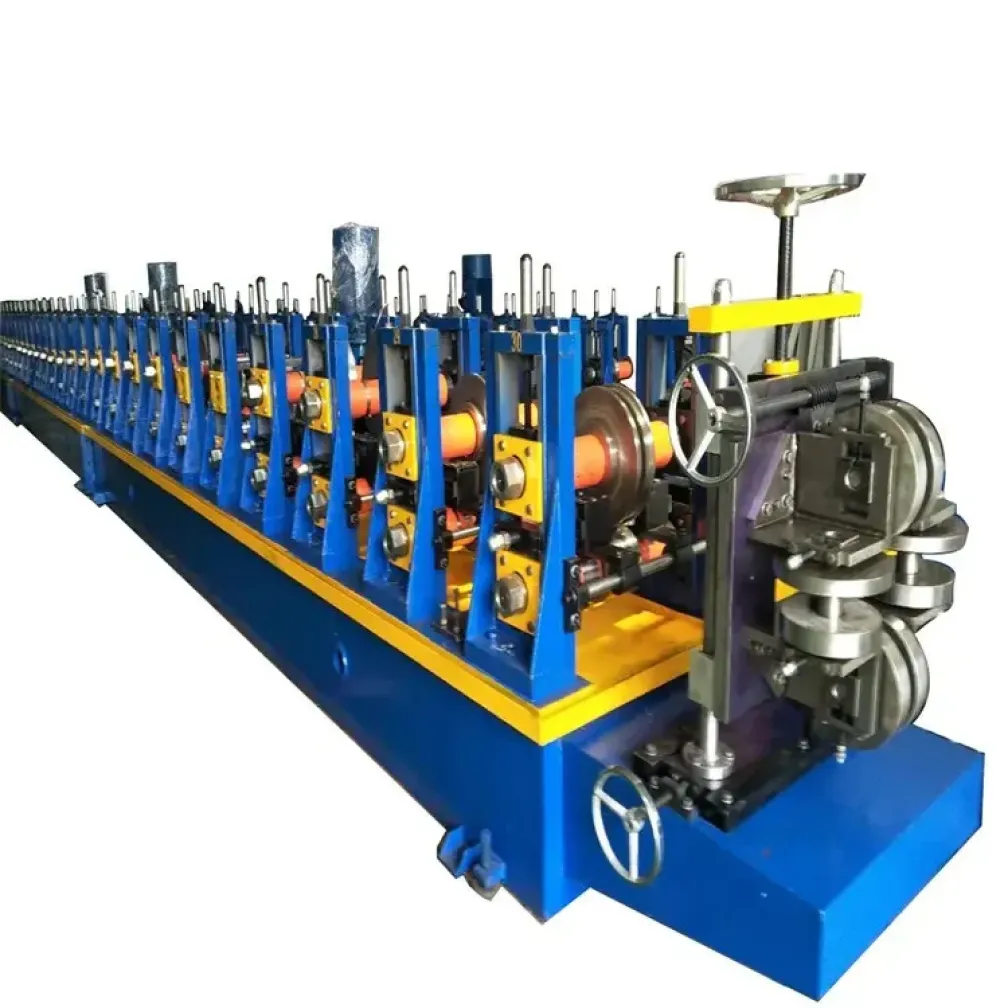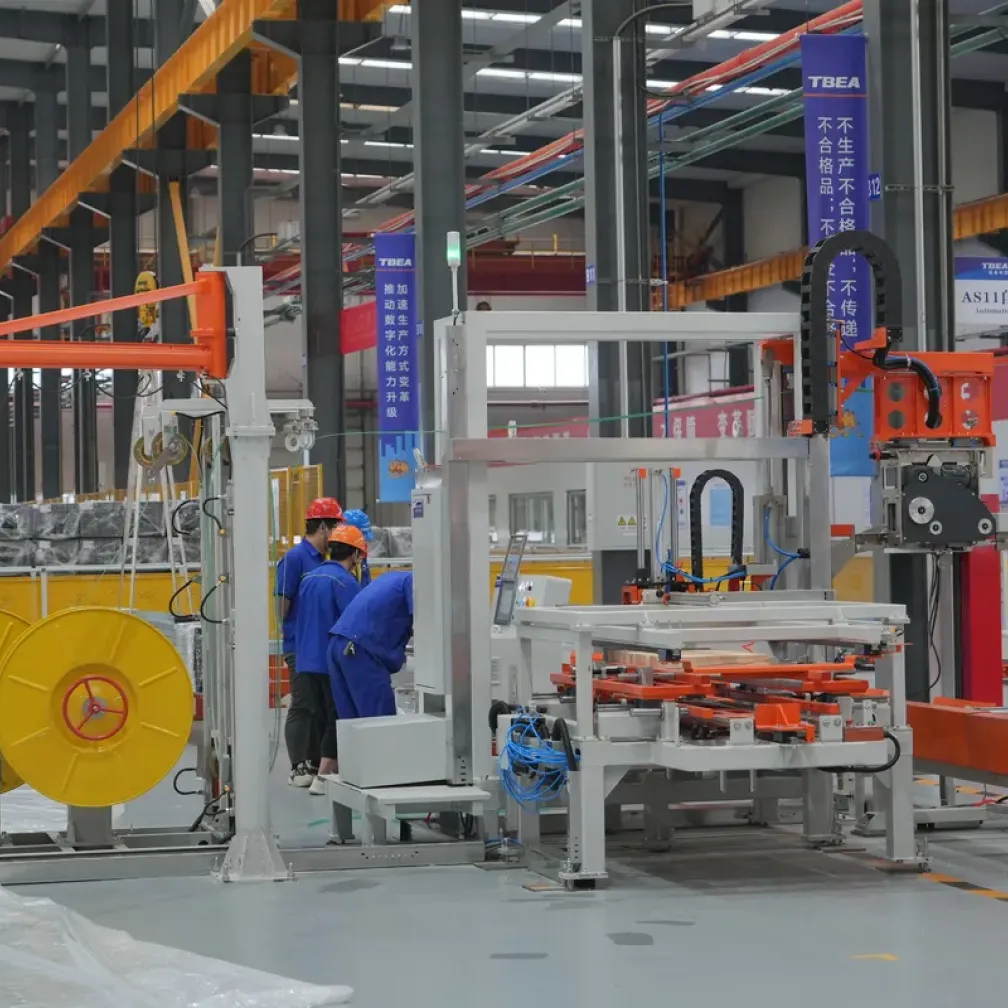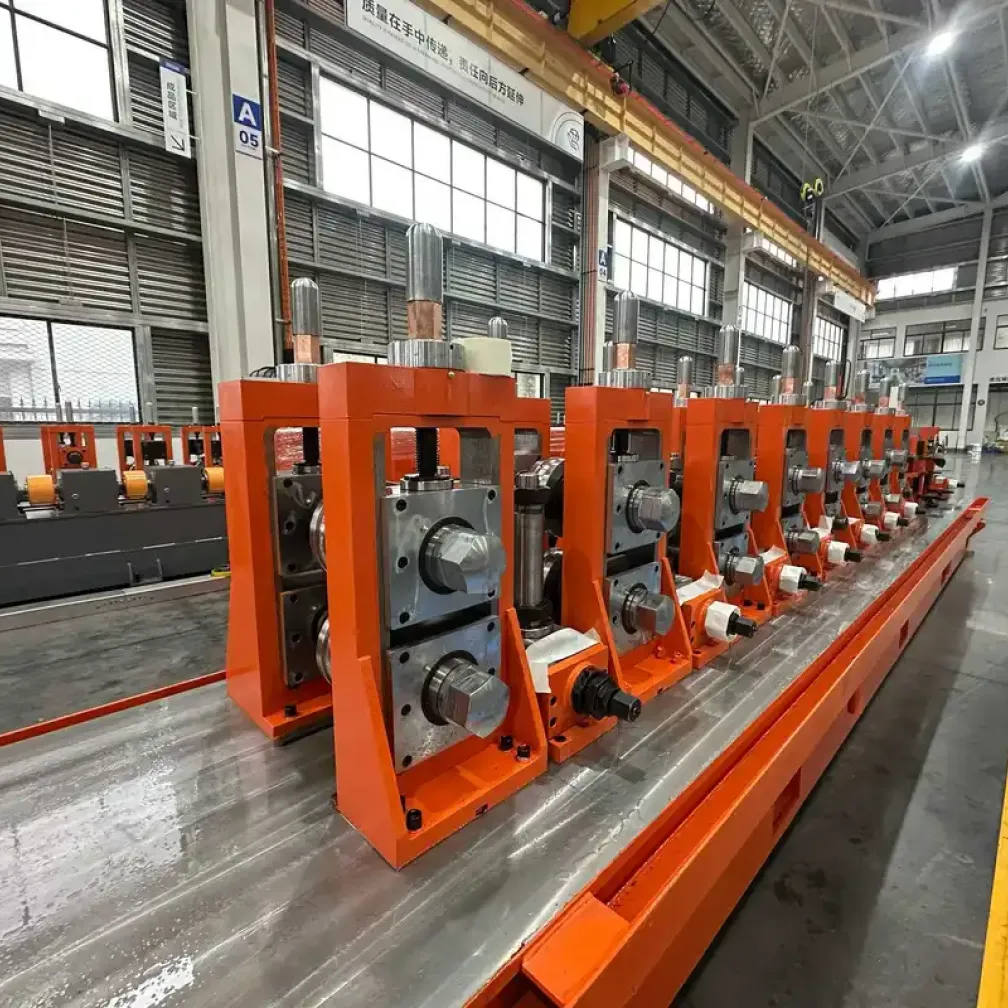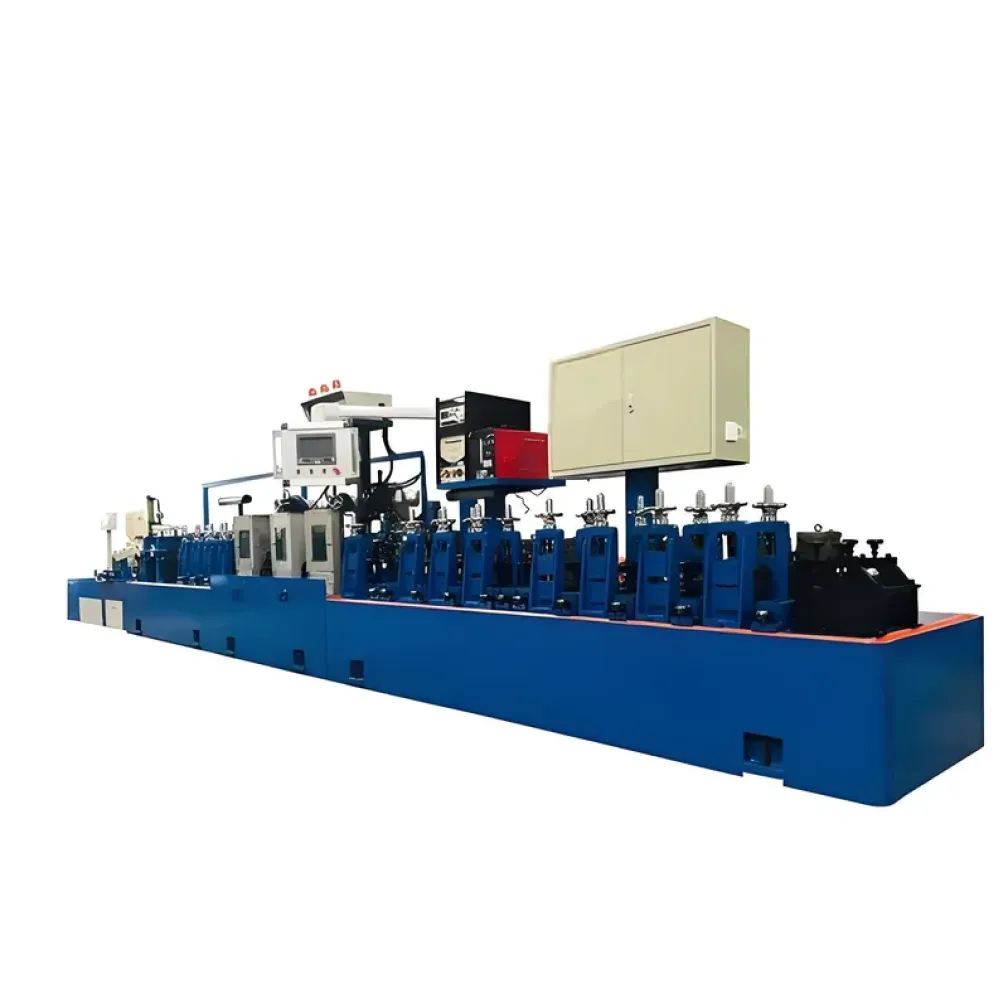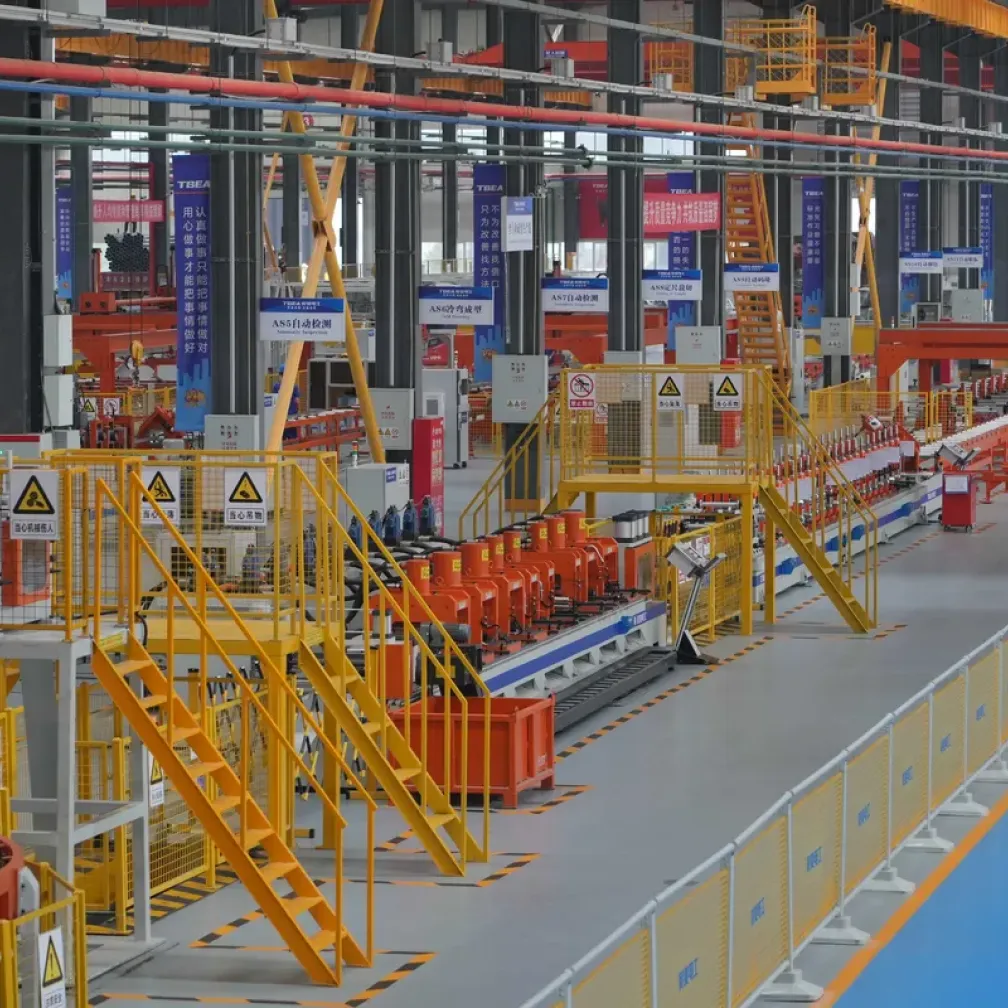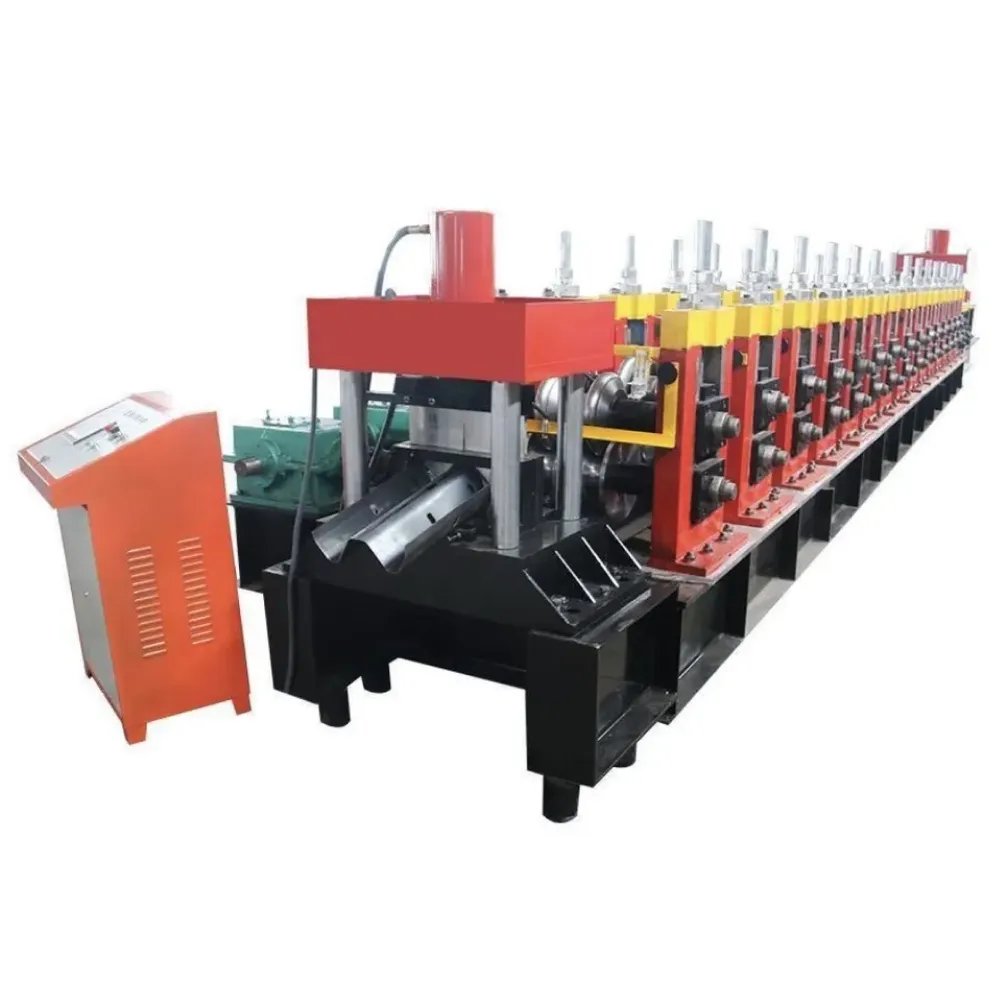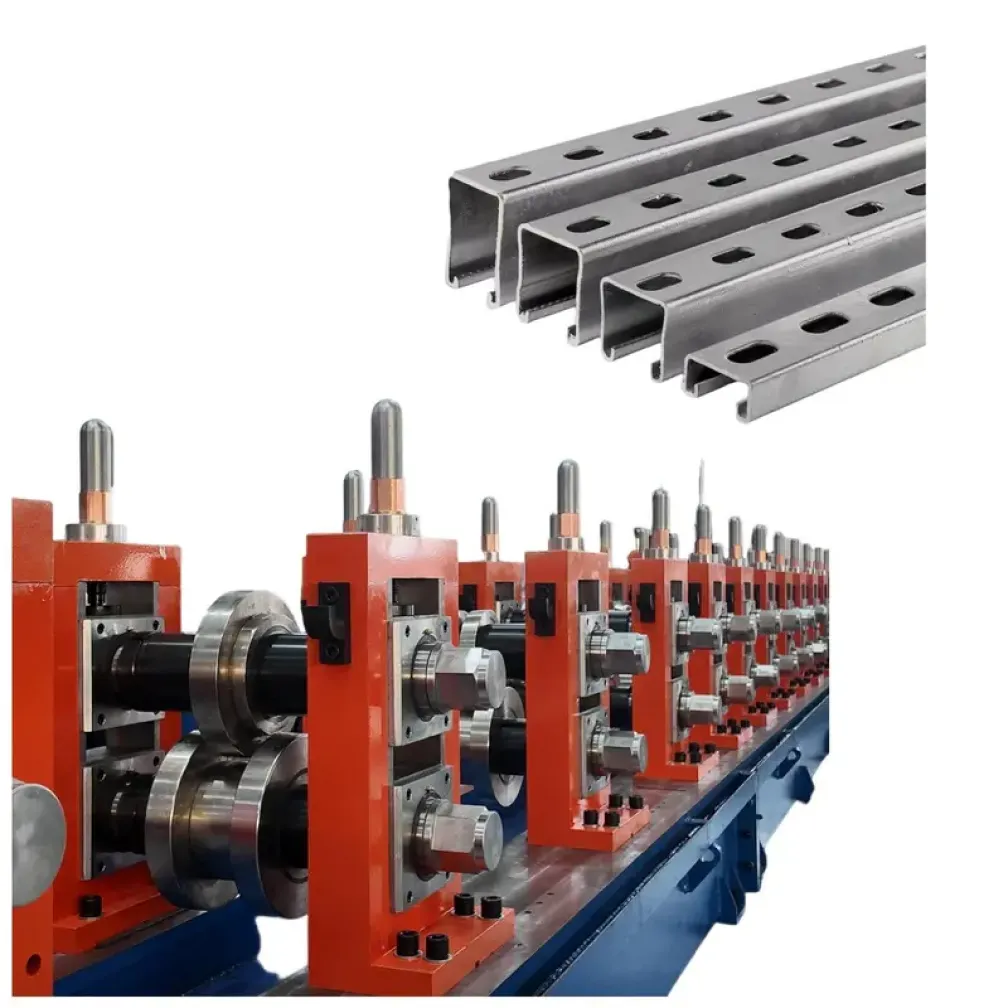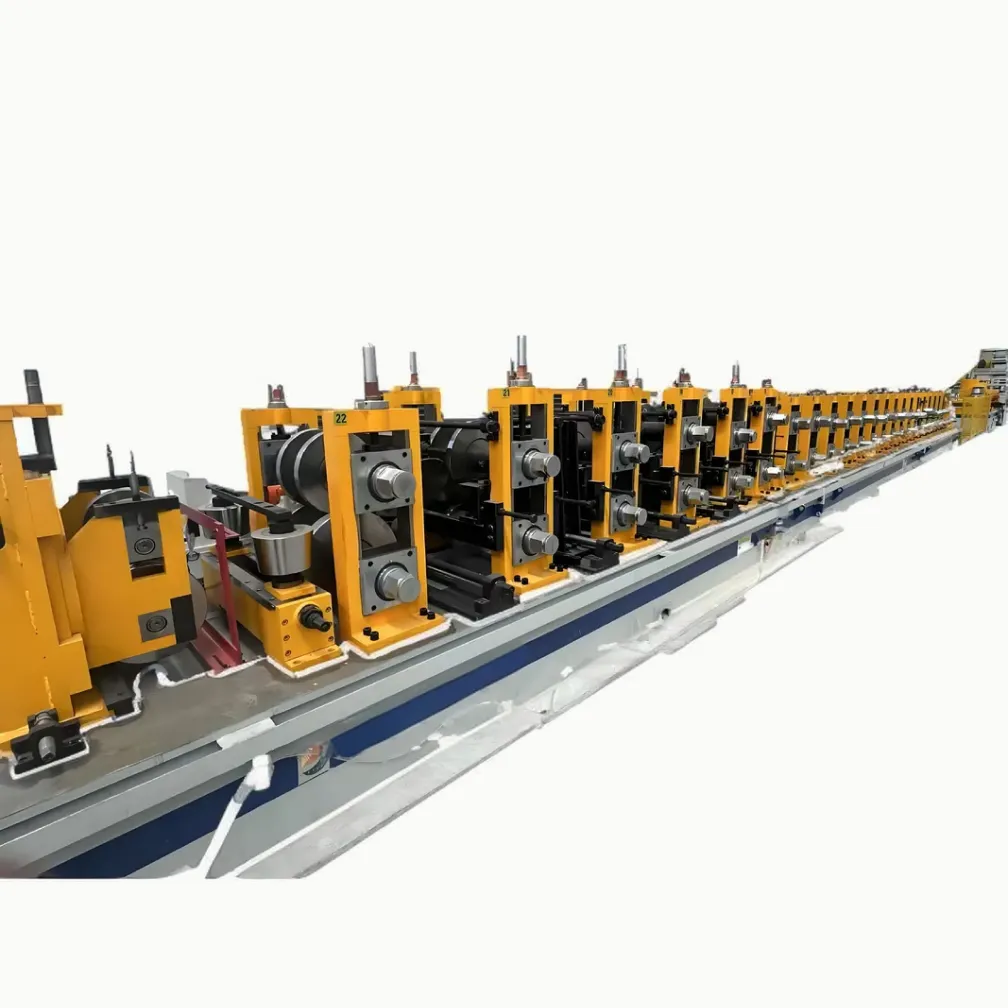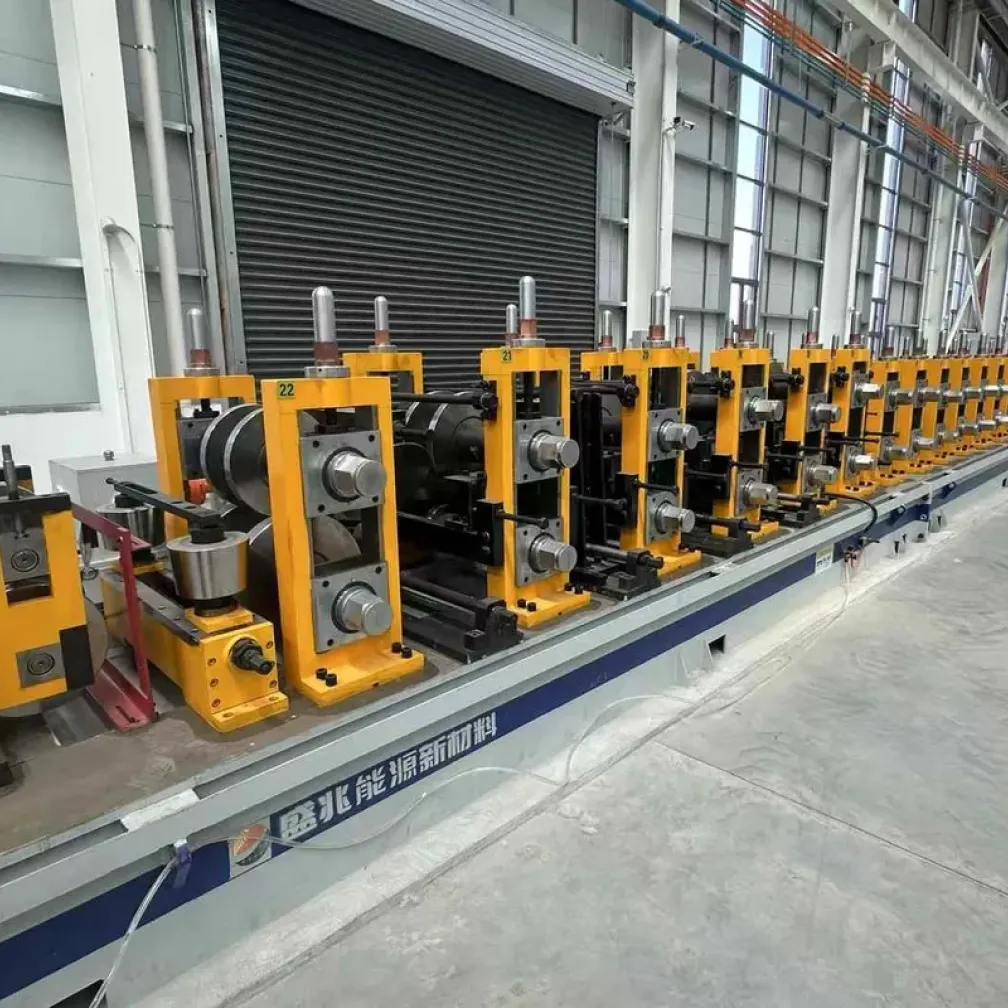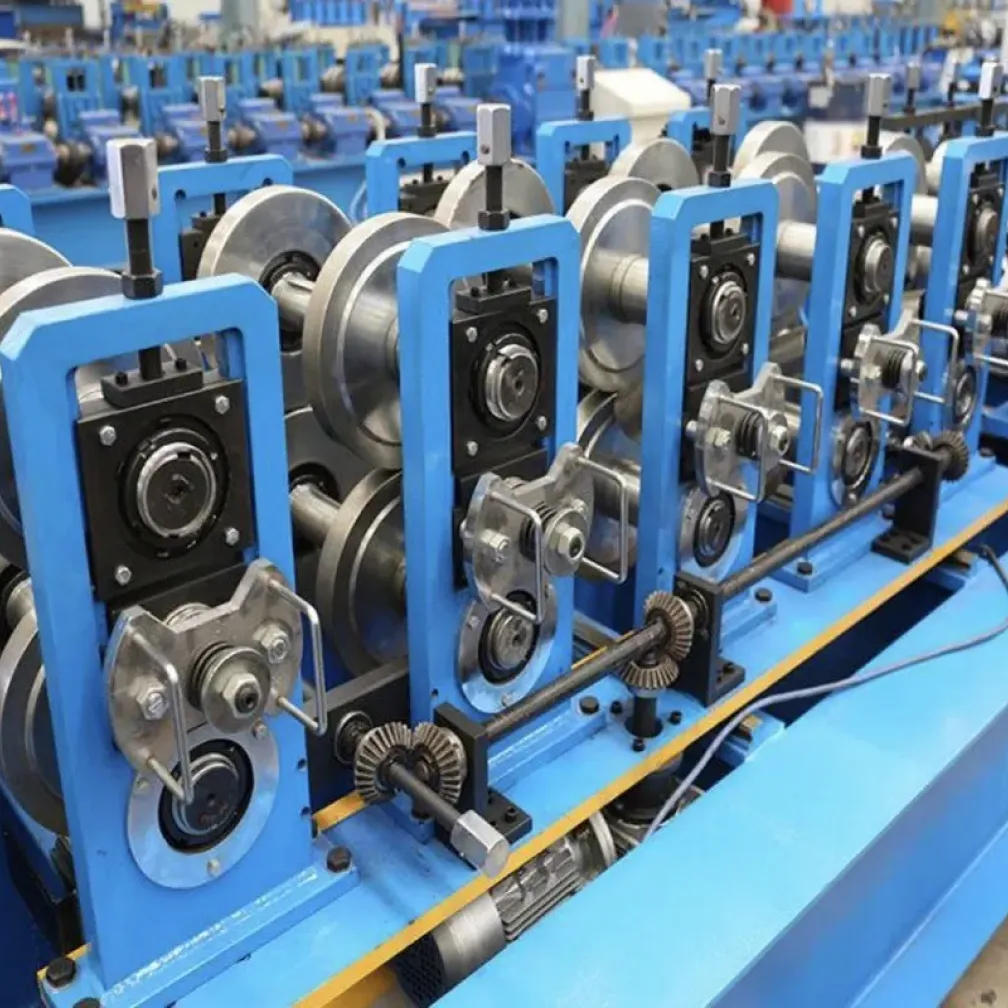


This solution is a complete production line for highway crash barrier beams, covering both the two-wave W-beam and the three-wave thrie-beam used on highways, bridges, and medians. One line converts steel strip into finished beams: leveled, punched with splice and post holes, roll formed, cut to standard length, and stacked for galvanizing. It is built for crash barrier manufacturers, galvanizing plants, and construction groups with steady road-safety demand. This page explains who the solution fits, the standards that define the product, how the line is configured, how to plan throughput, and the delivery and support terms.
Who This Guardrail Production Solution Is For
Three buyers get the fastest return. The first is the established crash barrier manufacturer who bids national road programs and needs certified capacity. The second is the galvanizing plant or steel trader who already serves infrastructure projects and wants to move up the value chain by producing the beams it currently buys. The third is a road construction group with multi-year highway contracts, where in-house beam production removes supplier lead times from the critical path. Guardrail demand is project-based and standards-driven, so the line must hold profile accuracy batch after batch: road authorities require every beam to be interchangeable regardless of when it was produced.
The Standards Decide the Product
Crash barrier beams are not a free-form product. Two standard systems govern most export markets. In North America and US-funded projects, AASHTO M180 defines the beam itself: dimensions, steel grade, base metal thickness, and zinc coating. Crash performance of the installed system is certified separately under MASH test levels, with TL-3 (a 2270 kg vehicle at 100 km/h and 25 degrees) as the common highway requirement. In Europe and many international tenders, EN 1317 defines containment classes from N1 up to H4, and the beam geometry follows the class specified in the contract.
The dimensional families are fixed by these standards. A W-beam is 310 to 312 mm wide with a wave depth of 80 to 85 mm, in effective lengths of 4320 mm for international markets and 3810 mm for North America. A thrie-beam is 506 mm wide. Base metal thickness runs from 2.67 mm up to 4 mm depending on class, and hot-dip zinc coating of 550 g/m2 or higher is the default finish. Because interchangeability is written into road specifications, the forming line must hold the profile within tight tolerance across every coil, and that requirement is what separates a guardrail line from a general-purpose roll former.
What the Line Produces
One line produces both beam families. Two-wave and three-wave profiles share the same frame, drive, and punching system, with dedicated roll sets for each profile. Switching between them is a roll change, planned in hours. Standard beams in 4320 mm, 4130 mm, and 3810 mm lengths are programmed on the touch screen, and custom lengths for curved or ramp sections are cut by entering the dimension. Companion components such as posts, spacer blocks, and terminal parts run on separate equipment, and we configure those lines on request so the plant can quote complete guardrail kits.
Line Configuration
The line is built heavy from the first unit, because 2 to 4.5 mm high-strength strip punishes light equipment:
| Stage | Equipment | Function |
|---|---|---|
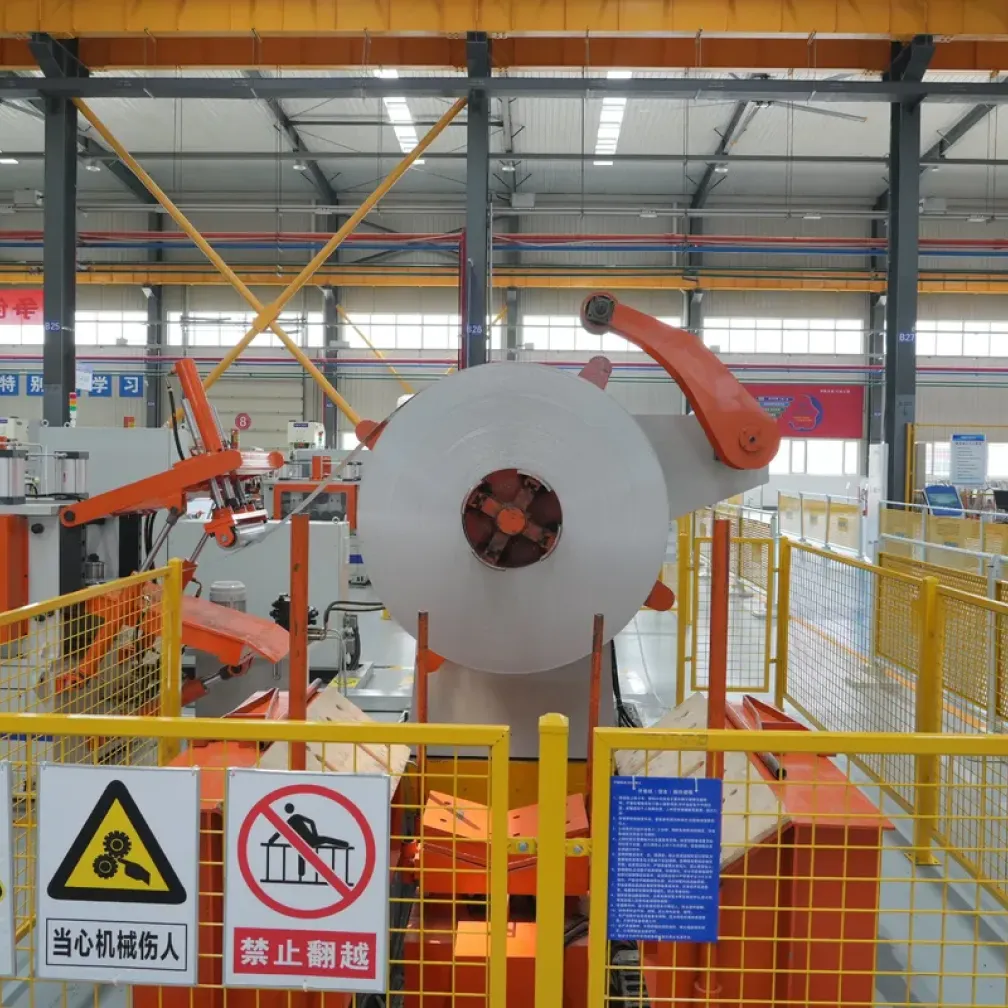
| Decoiling | Heavy hydraulic decoiler, sized for full-width strip coils | Pays off strip up to 480 mm wide under controlled tension |
| Leveling | Heavy multi-roll leveler | Flattens high-strength strip before punching |
| Feeding and punching | Servo feeder with hydraulic punch presses | Positions strip and punches splice and post hole patterns inline |
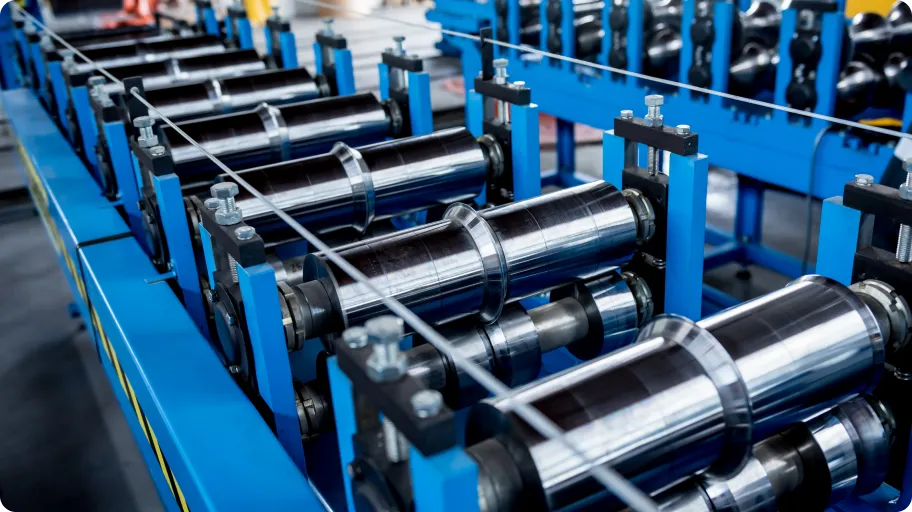
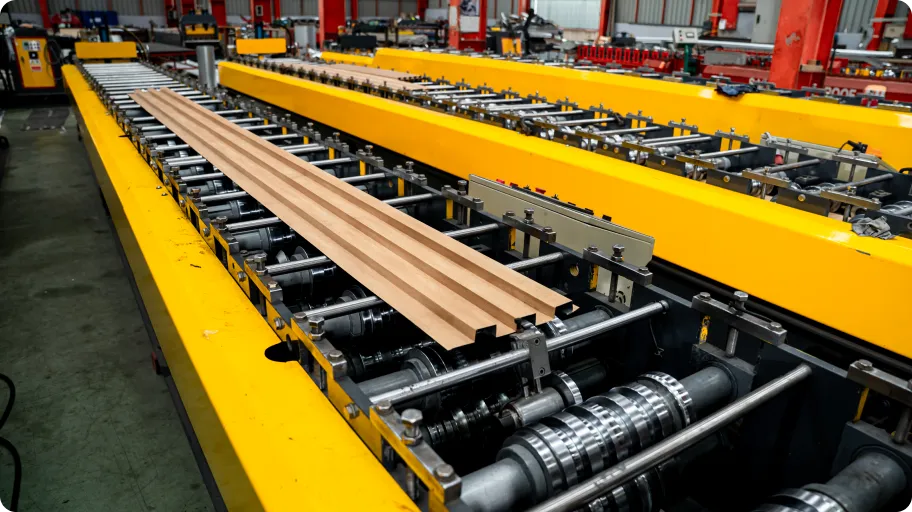
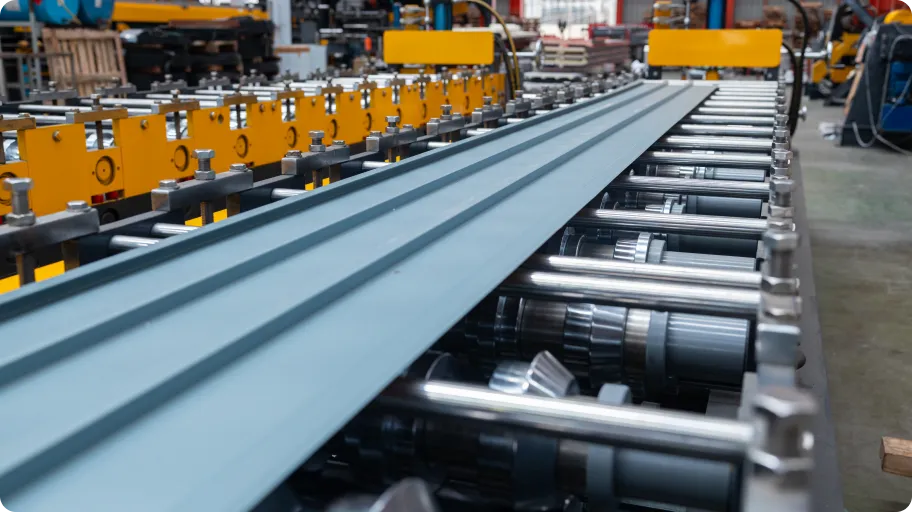
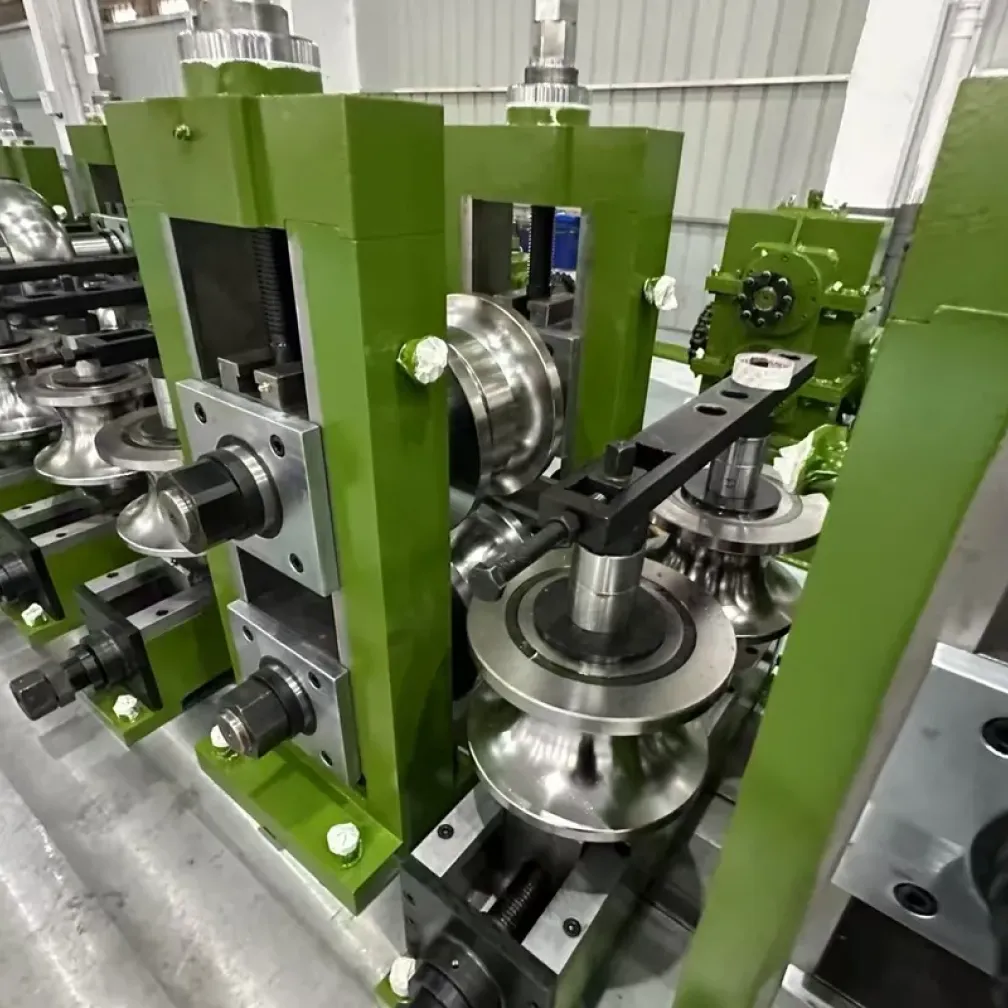
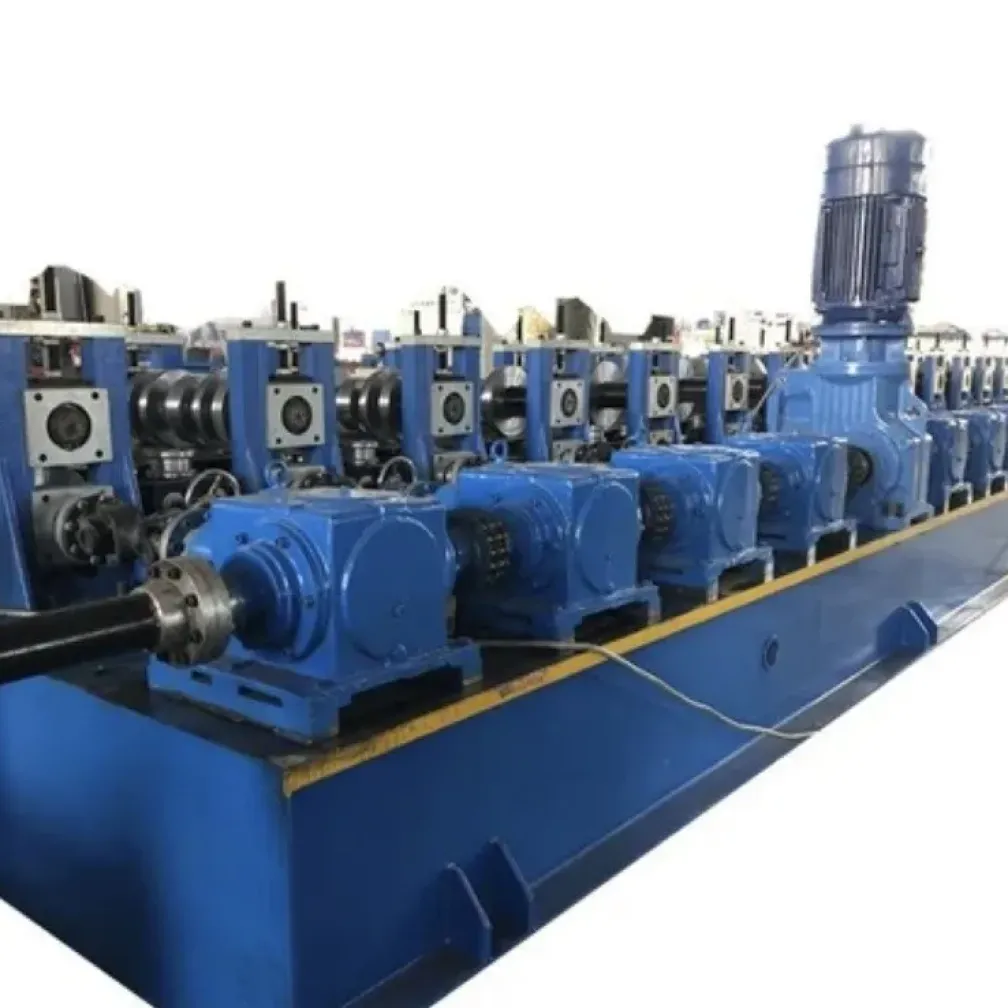
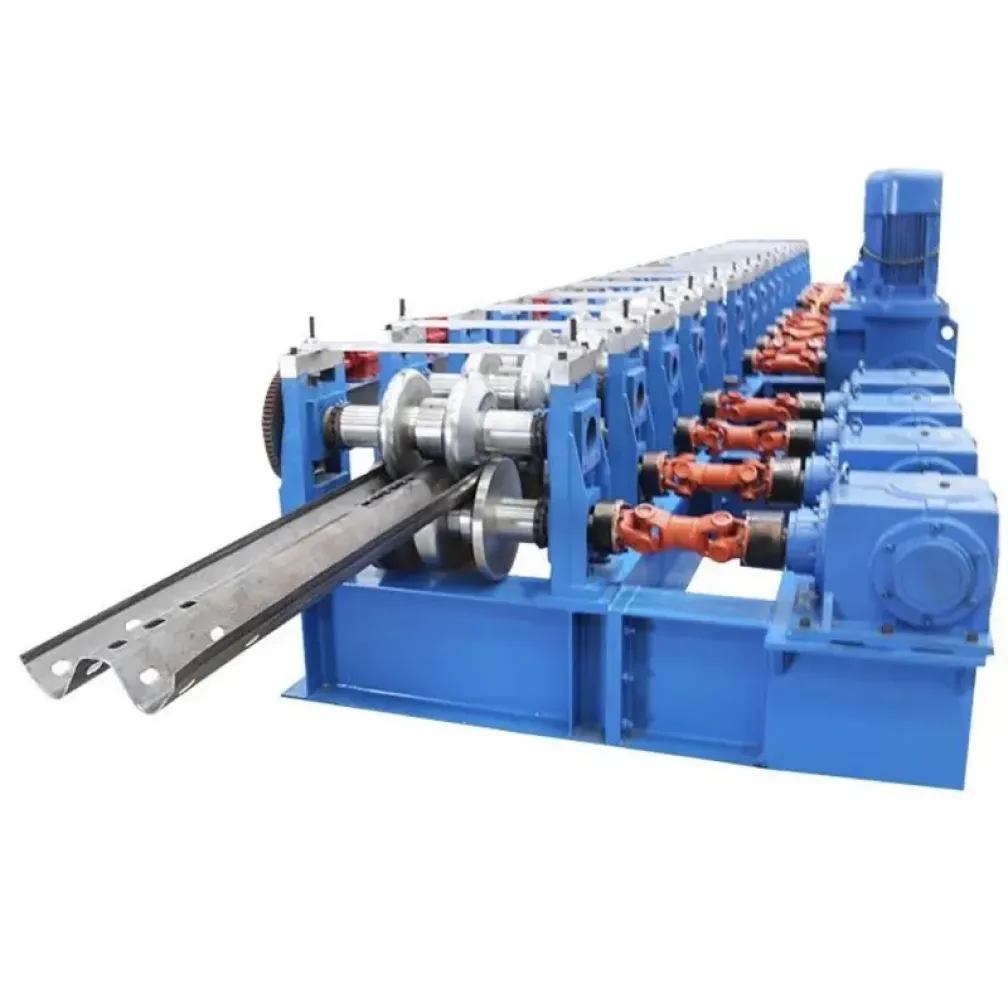
| Forming | Roll forming mill, 15 to 24 stands, GCr15 or Cr12 rollers hardened to HRC58-63, gearbox drive | Forms the wave profile with plus or minus 2 mm accuracy |
| Cutting | Flying hydraulic cut-off | Cuts beams to programmed length in motion |
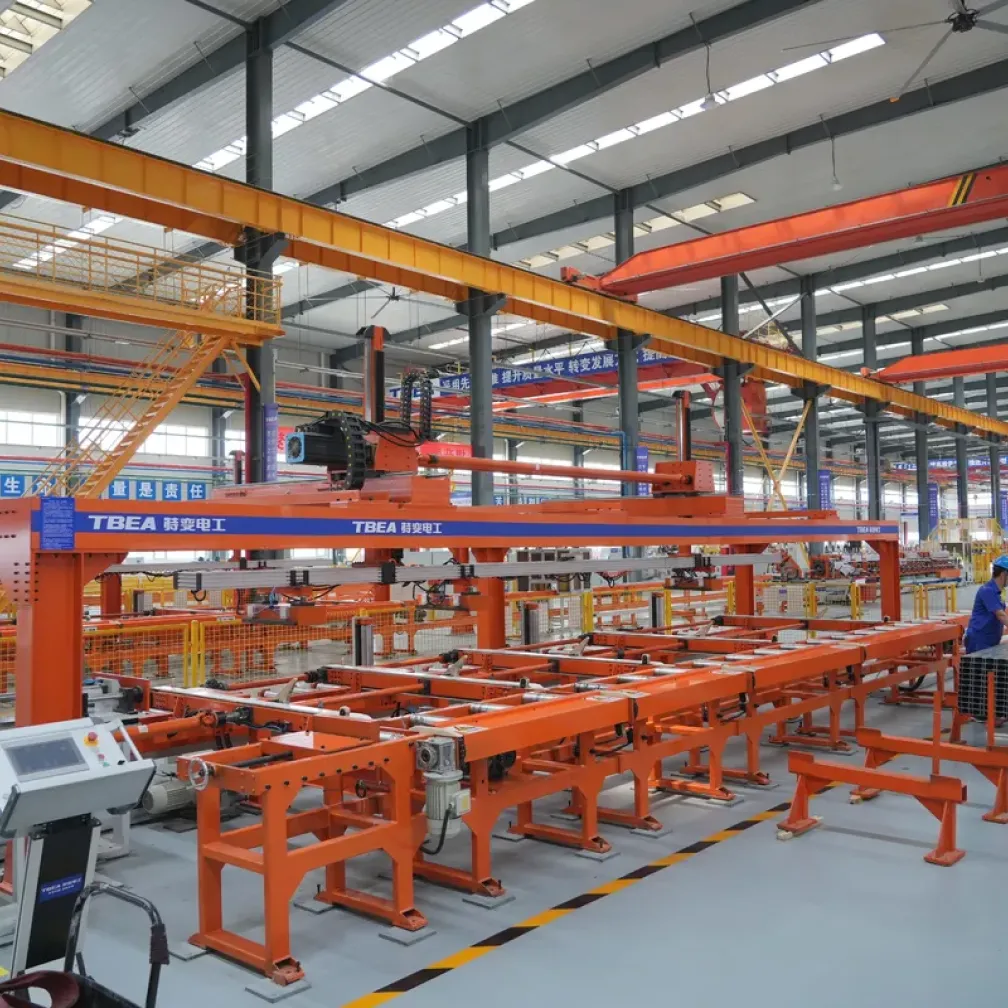
| Stacking | Automatic stacker, shared for two-wave and three-wave | Builds square bundles for galvanizing and transport |
Installed power runs 55 to 120 kW depending on thickness range and target speed, with a 15-inch touch screen for length, batch, and punching programs. Two flow layouts exist: post-cut, where the beam is cut after forming, and pre-cut, where blanks are cut before forming for higher line speed. We configure the layout against your thickness range and output target during quotation.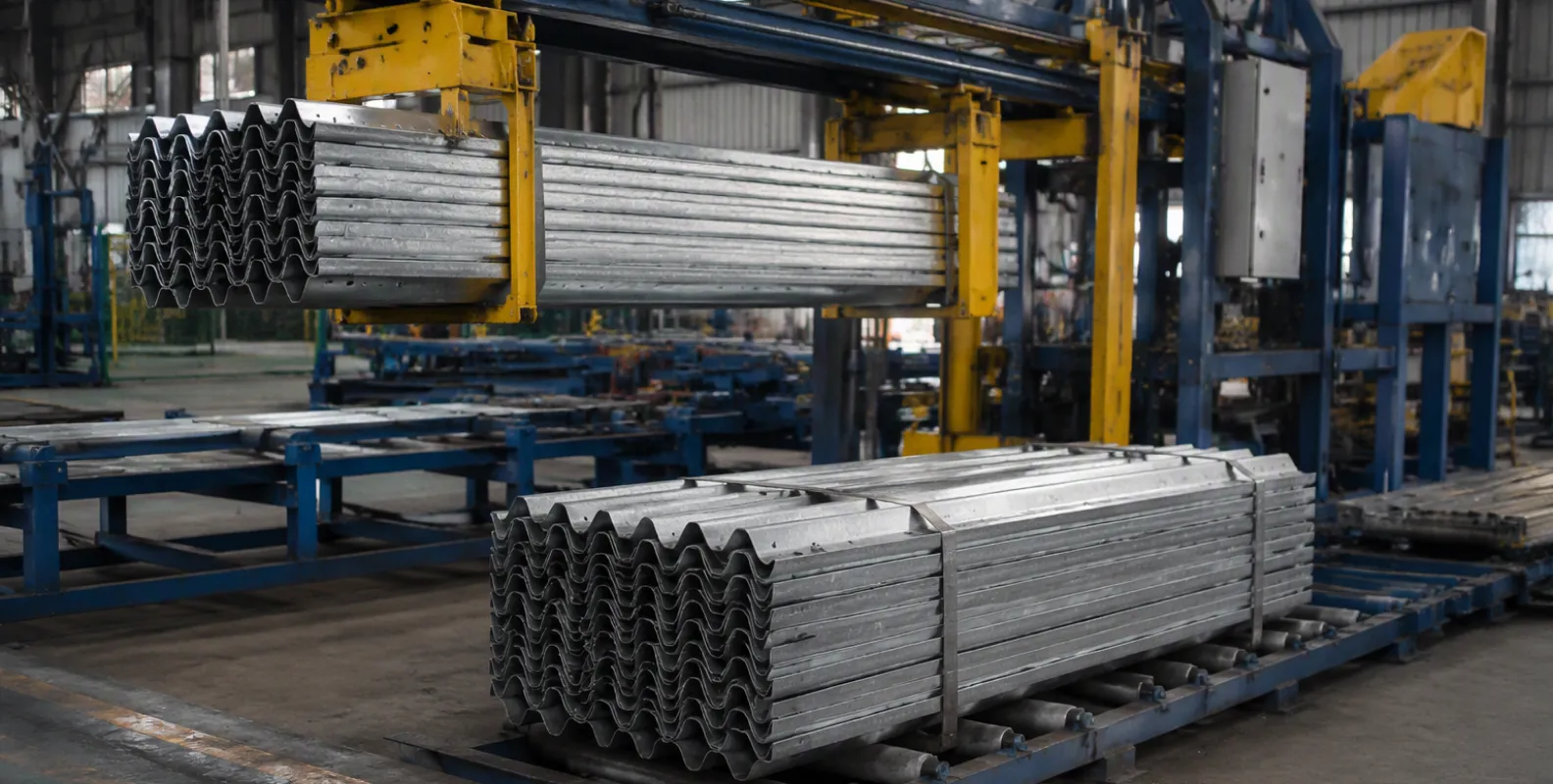
Punching for Splice and Post Connections
Every beam carries two hole families: splice holes at the ends where beams overlap, and post holes or slots along the length where the beam bolts to the posts. Hole patterns follow the governing standard and the post spacing in the contract, typically 1.905 m or 2 m. The line punches both families while the strip is flat, with servo positioning holding location accuracy at full speed, so the finished beam bolts up on site without rework.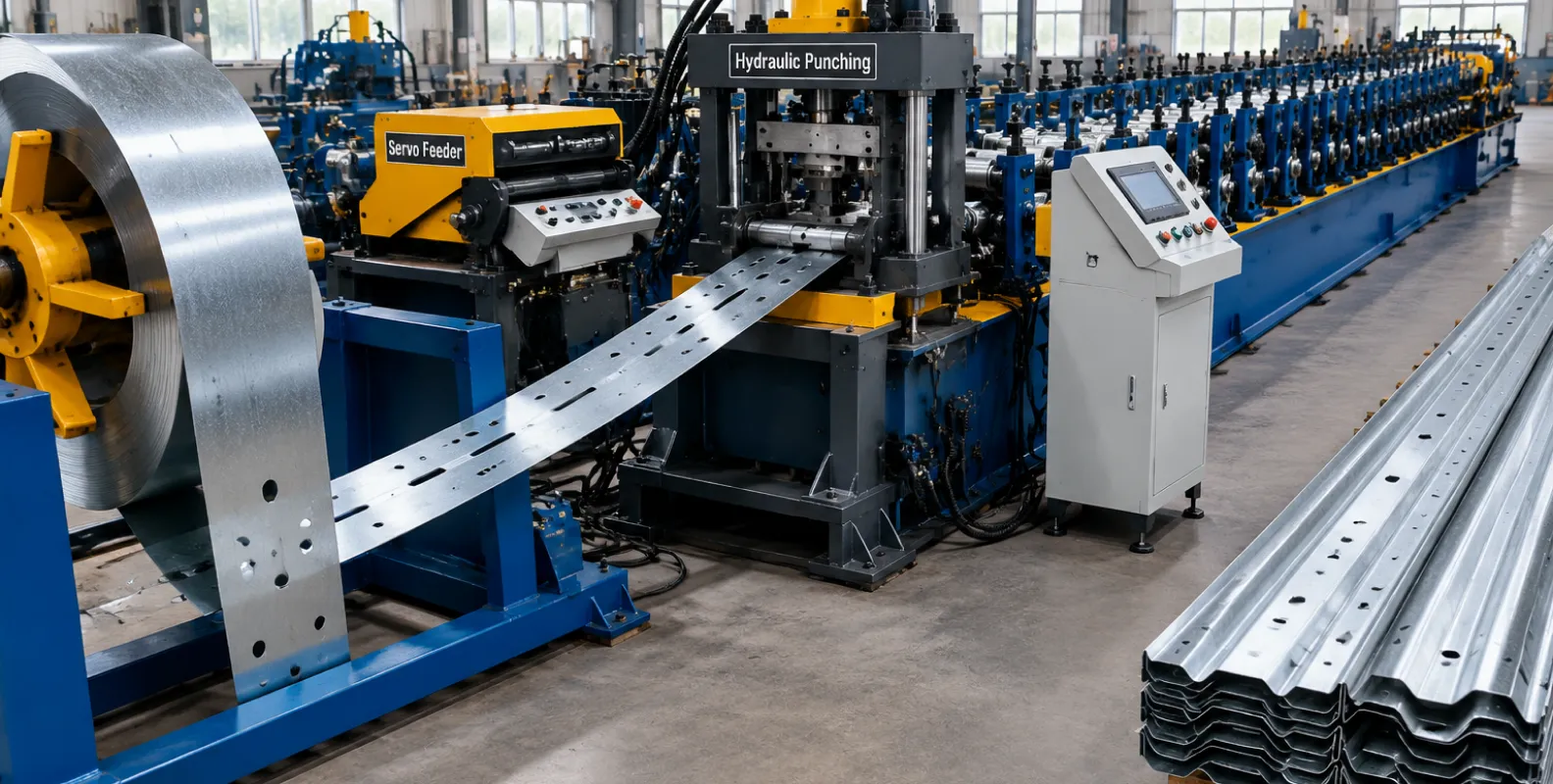
Planning Plant and Throughput
Standard production speed is 8 to 12 m/min on 3 to 4 mm strip. The arithmetic is direct: a 4320 mm beam at 12 m/min is about 2.7 beams per minute, and a 3 mm W-beam weighs about 49 kg, so the line converts roughly 8 tons per hour at full speed. Plan on 60 to 70 percent uptime for coil changes, roll changes, and bundling, and a single shift moves 35 to 45 tons of finished beams. The plant needs 50 to 70 m of straight line length, a 10-ton crane for coils, and two to three operators per shift.
Economics and the Galvanizing Question
In-house production removes the manufacturer margin and the freight on long beams, and it puts project scheduling in your hands. One process decision shapes the plant: most standards, including AASHTO M180 with M111, call for hot-dip galvanizing after fabrication, which means beams are formed and punched in black strip and then zinc coated. Producers therefore either run their own galvanizing bath or lock in capacity with a local galvanizer. Pre-galvanized strip is accepted in some markets and simplifies the flow, so confirm the coating requirement of your target standards before the line layout is fixed. We will run the crossover economics with your local coil price and galvanizing rates during quotation.
Delivery, Installation, and Support
Standard guardrail lines are completed in 30 to 45 days, and customized configurations take 60 to 90 days. Every line passes a 48-hour trial run with real strip before packing. Shipment is arranged FOB, CFR, CIF, or door-to-door, with a container loading plan for the long mill frame. THRONCH engineers install and commission the line on site in 3 to 5 days and train your operators before handover. The warranty covers 12 months for the line and 18 months for core components, with technical answers within 24 hours for the life of the machine.
Start Your Guardrail Production Project
Send us your target standard, profile drawings or dimensions, thickness range, and monthly tonnage, and our engineers will return a line proposal with configuration, roll set plan, and layout. Product-level references are on our highway guardrail roll forming machine page, with dedicated pages for the two-wave and three-wave builds, and automation options under automatic roll forming machine. Contact us at amy@thronch.com.
Frequently Asked Questions
What is the difference between two-wave and three-wave guardrail beams?
A two-wave beam (W-beam) is 310 mm wide and is the standard highway barrier. A three-wave beam (thrie-beam) is 506 mm wide with a deeper profile, used where higher containment or lower deflection is required, such as bridges, medians, and heavy-vehicle routes.
Can one line produce both two-wave and three-wave beams?
Yes. Both profiles run on the same frame, drive, punching, and stacking systems with dedicated roll sets. Switching profiles is a planned roll change measured in hours.
Which standards can the line produce to?
The line is configured to your target market: AASHTO M180 for North America and US-funded projects, EN 1317 containment classes for Europe, and regional standards such as AS/NZS 3845 on request. Hole patterns and lengths follow the standard and the contract drawings.
What material and thickness does the line run?
Strip from 2.0 to 4.5 mm in Q235, Q355, S355MC, and high-strength grades such as Q700HL, up to 480 mm wide. Rollers are GCr15 or Cr12 hardened to HRC58-63 to hold profile accuracy on these grades.
How fast does a guardrail line run?
Standard production speed is 8 to 12 meters per minute on 3 to 4 mm strip, which equals roughly two to three standard beams per minute. Higher-speed pre-cut layouts are available for thin-gauge high-volume programs.
Should beams be galvanized before or after forming?
Most road standards, including AASHTO M180 with M111, require hot-dip galvanizing after fabrication, so beams are formed and punched in black strip and coated afterward. Some markets accept pre-galvanized strip. Confirm the coating clause of your target standard before finalizing the plant layout.
How many operators does the line need?
Two to three operators per shift cover coil loading, supervision, and bundle handling, plus crane and forklift support for coils and finished bundles.
What is the lead time for a complete guardrail line?
Standard lines ship in 30 to 45 days after order confirmation, and customized builds take 60 to 90 days. A 48-hour trial run with real strip is completed before shipment.
-

THRONCH
Cold Roll Forming Machine Manufacturer
THRONCH is a direct manufacturer specializing in custom cold roll forming lines and welded pipe mills. With over a decade of engineering expertise, we share technical insights and deliver high-precision